22.08.2022

A new turn for e-mobility

Spotlight on cost-per-part in machining stator housings

When a machine tool manufacturer and a tool manufacturer known for boring and fine boring tools get together for a joint project, extraordinary results are guaranteed. NILES-SIMMONS and MAPAL have come together to develop a process that dramatically reduces the machining time of stator housings for electric motors in the e-mobility sector and features innovative details.
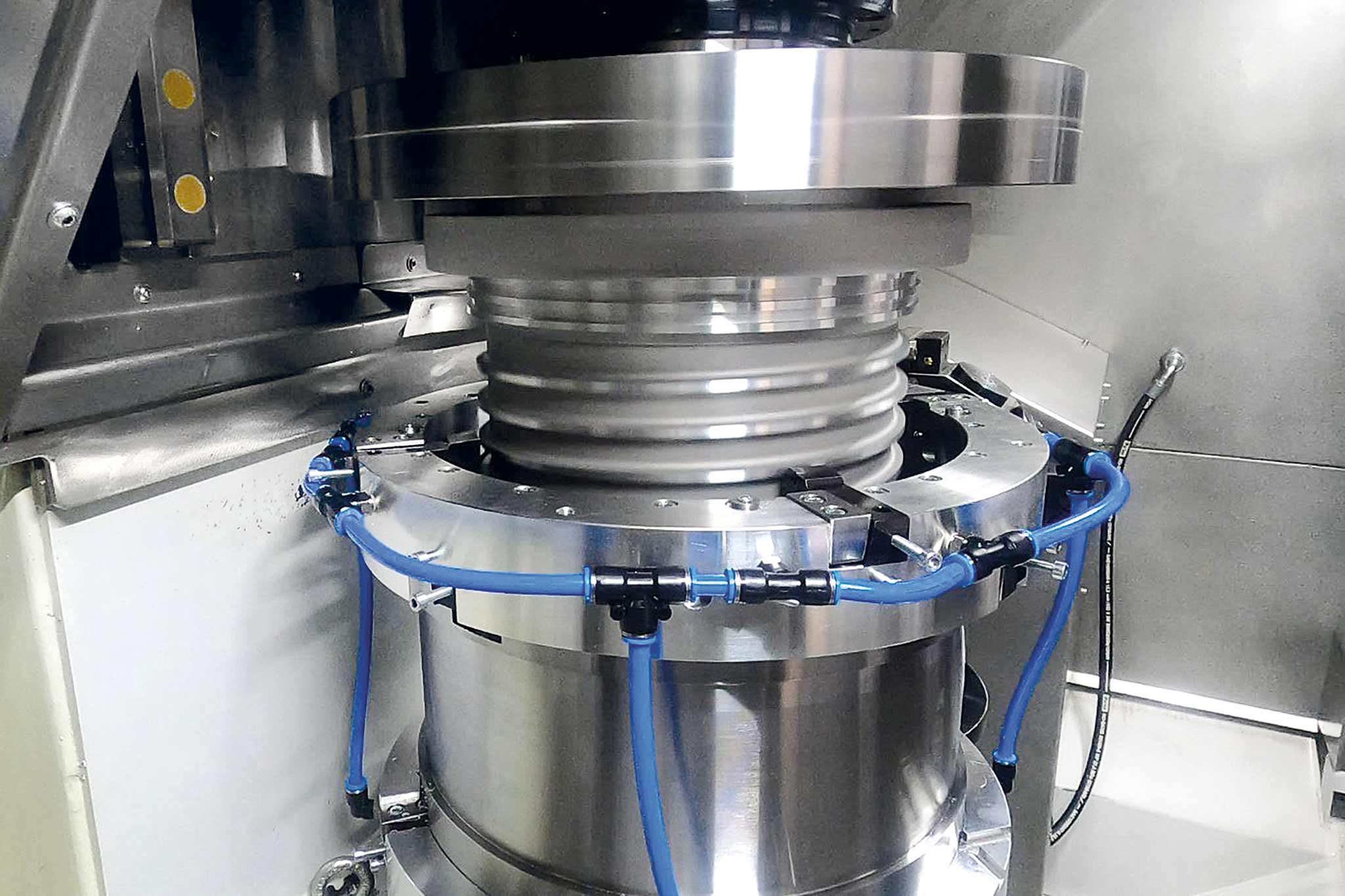
The semi-finishing tool for inner machining is surrounded by a bell-shaped outer tool.
  • The semi-finishing tool for inner machining is surrounded by a bell-shaped outer tool.
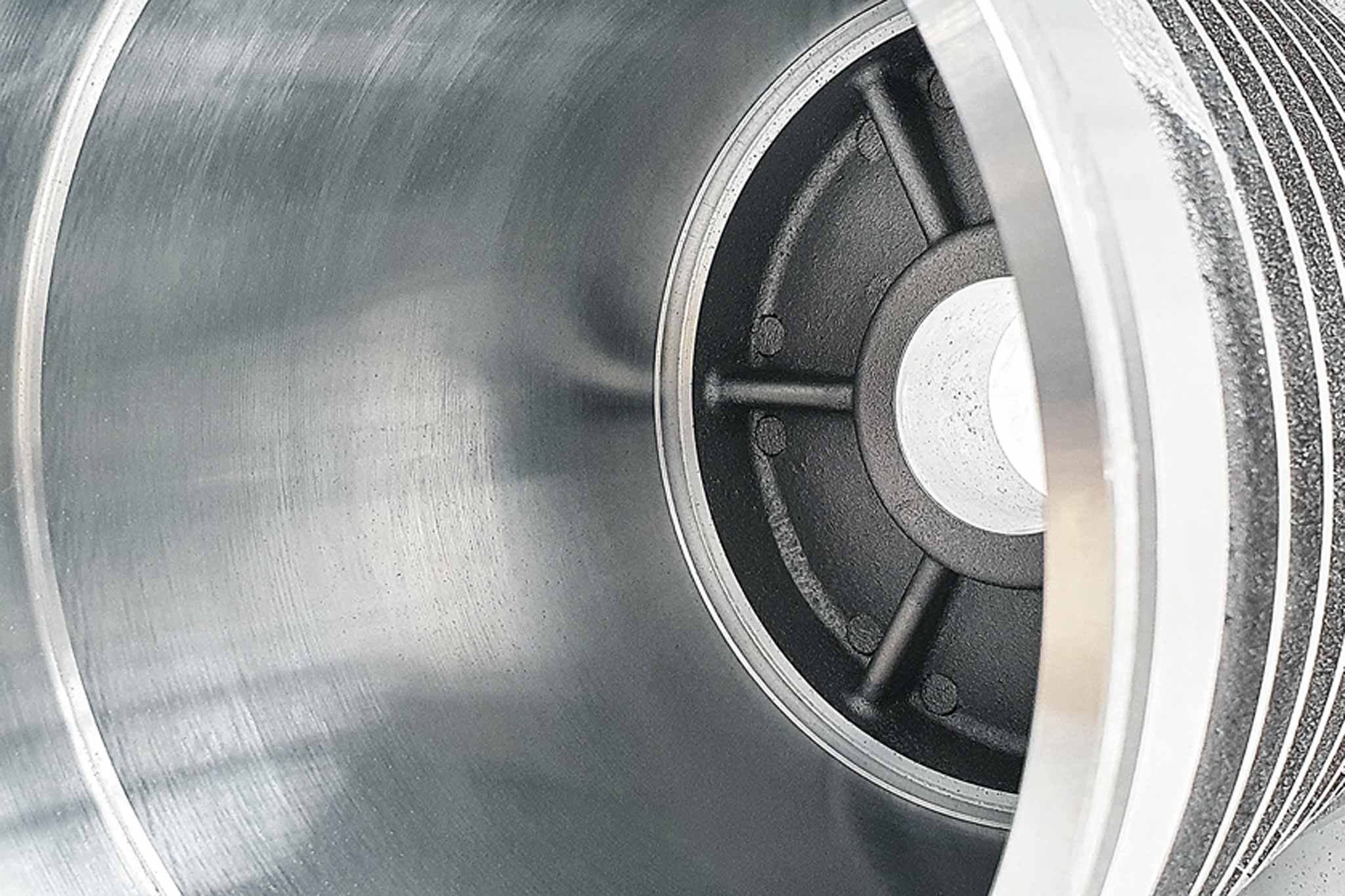
  • A close-up of the stator housing.
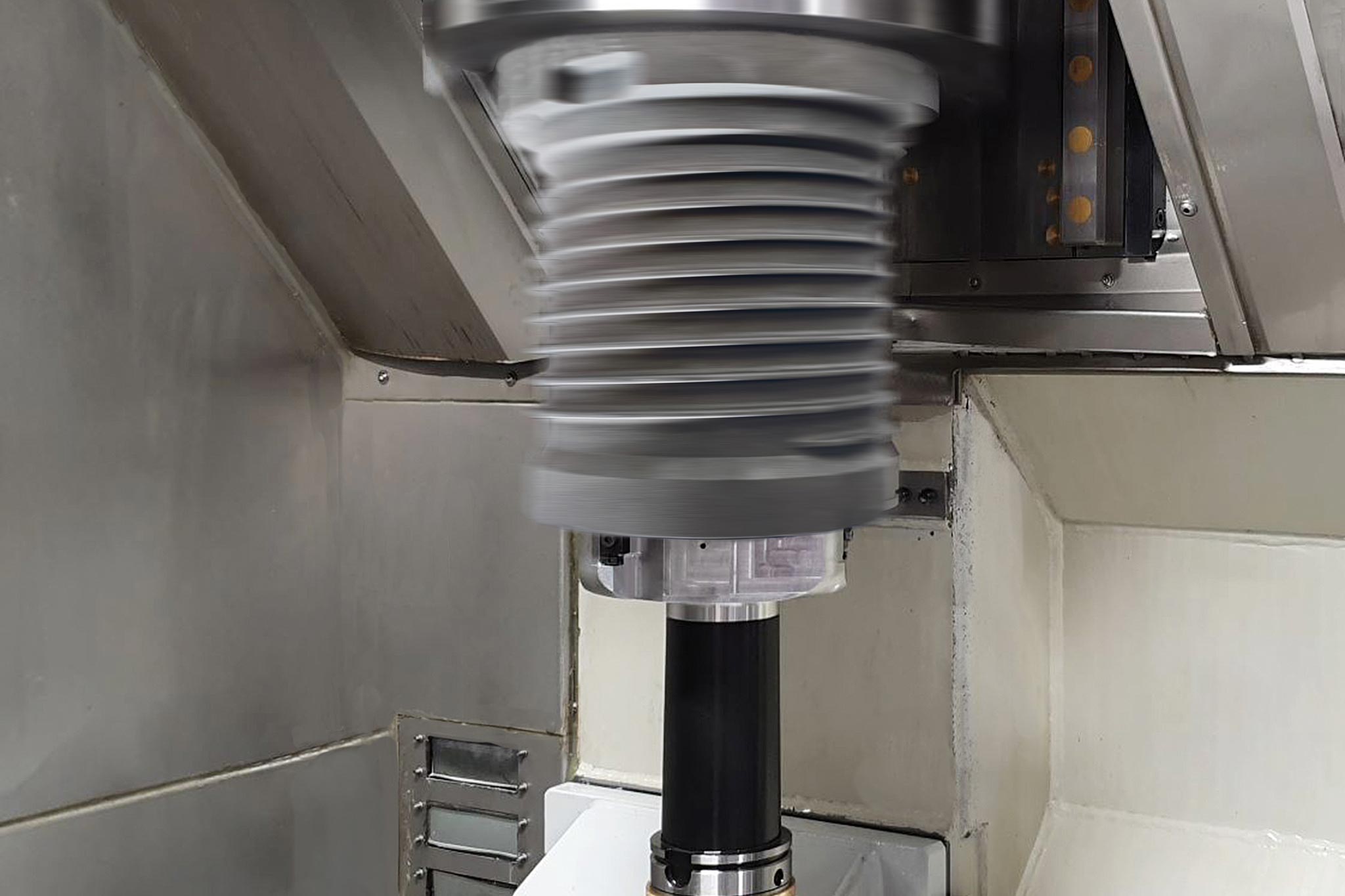
  • The picture shows the semi-finishing tool and, at the top, the workpiece.
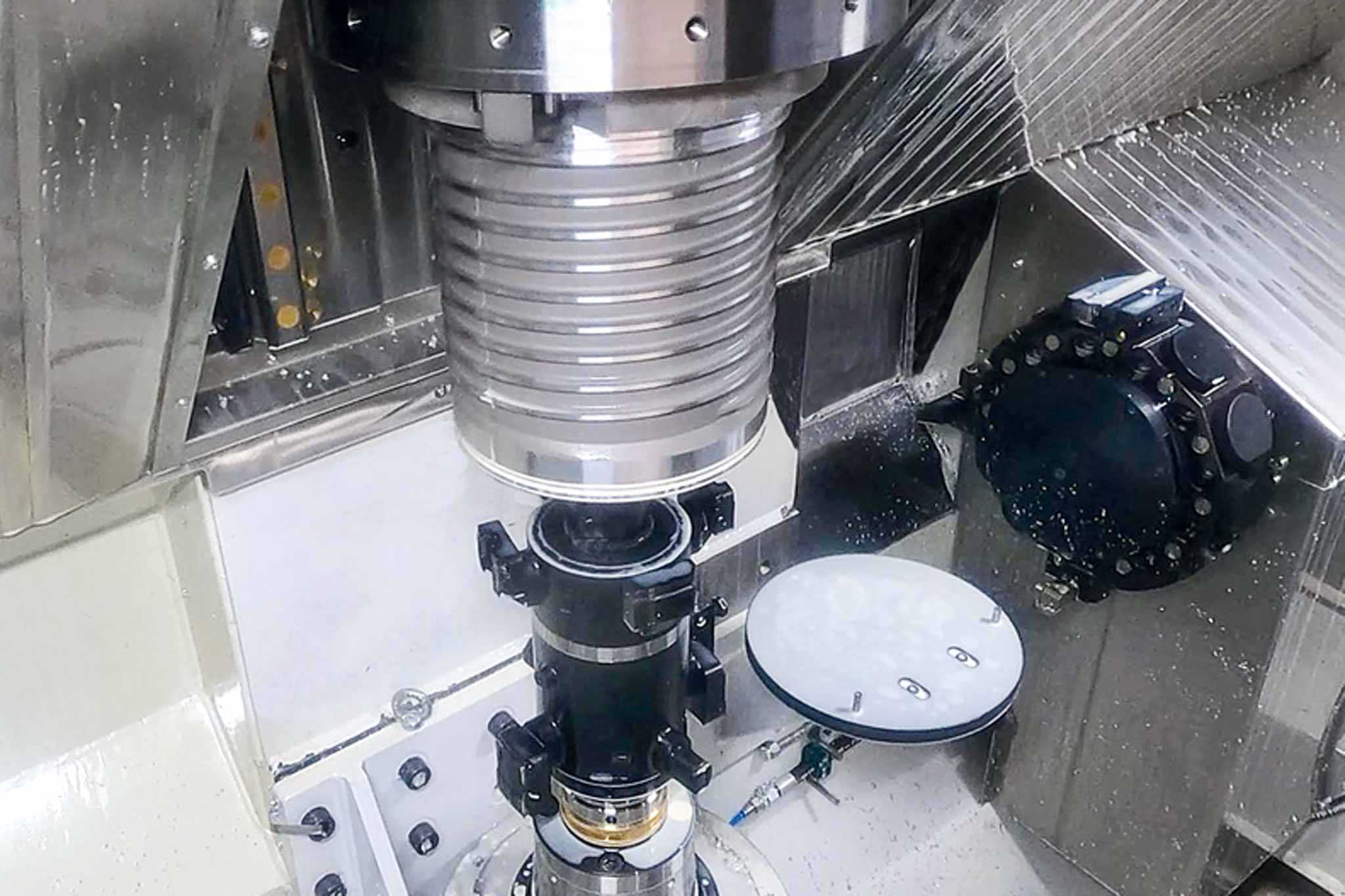
  • The roughing tool during machining.
  • The workpiece dips into the annular gap between the outer tool and the inner tool.
  • The finishing tool in use.
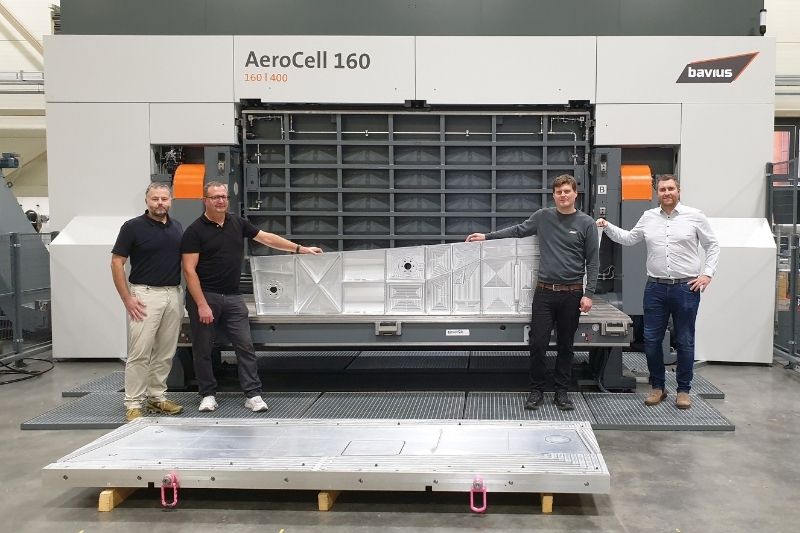
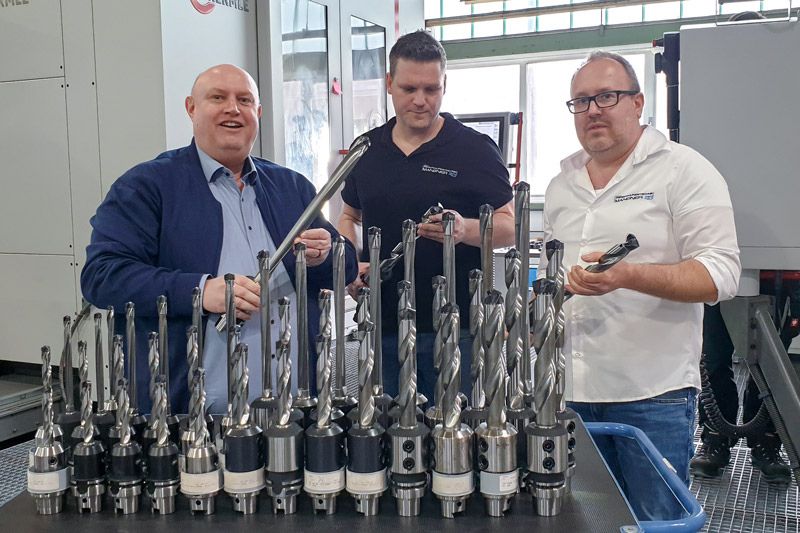
  • Thomas Lötzsch, Christian Winkler and Daniel Pilz from NILES-SIMMONS with André Ranke, Axel Schwarze and Heiko Süß from MAPAL.

The shift from conventional combustion engines to electric drives in the automotive industry is becoming increasingly clear. NILES-SIMMONS is facing up to this change and targeting parts production for the e-mobility sector with highly efficient manufacturing processes – with the aim of seamlessly following on from the golden era of crankshaft manufacture.

The majority of machines built by NILES-SIMMONS in Chemnitz are used for the machining of rotationally symmetrical workpieces. While turning plays a key role here, MAPAL as a tool manufacturer focuses primarily on cubic parts which are drilled, reamed and milled. In light of this, it’s little surprise that there had been few points of contact between the two companies in the past. That changed at the EMO 2019 trade show. At MAPAL’s stand, NILES-SIMMONS discovered an exhibit identified as a turning workpiece: a stator housing for electric motors. By then, MAPAL had established fine boring tools for machining parts on milling centres as a highly efficient and ultra-precise process in the industry.
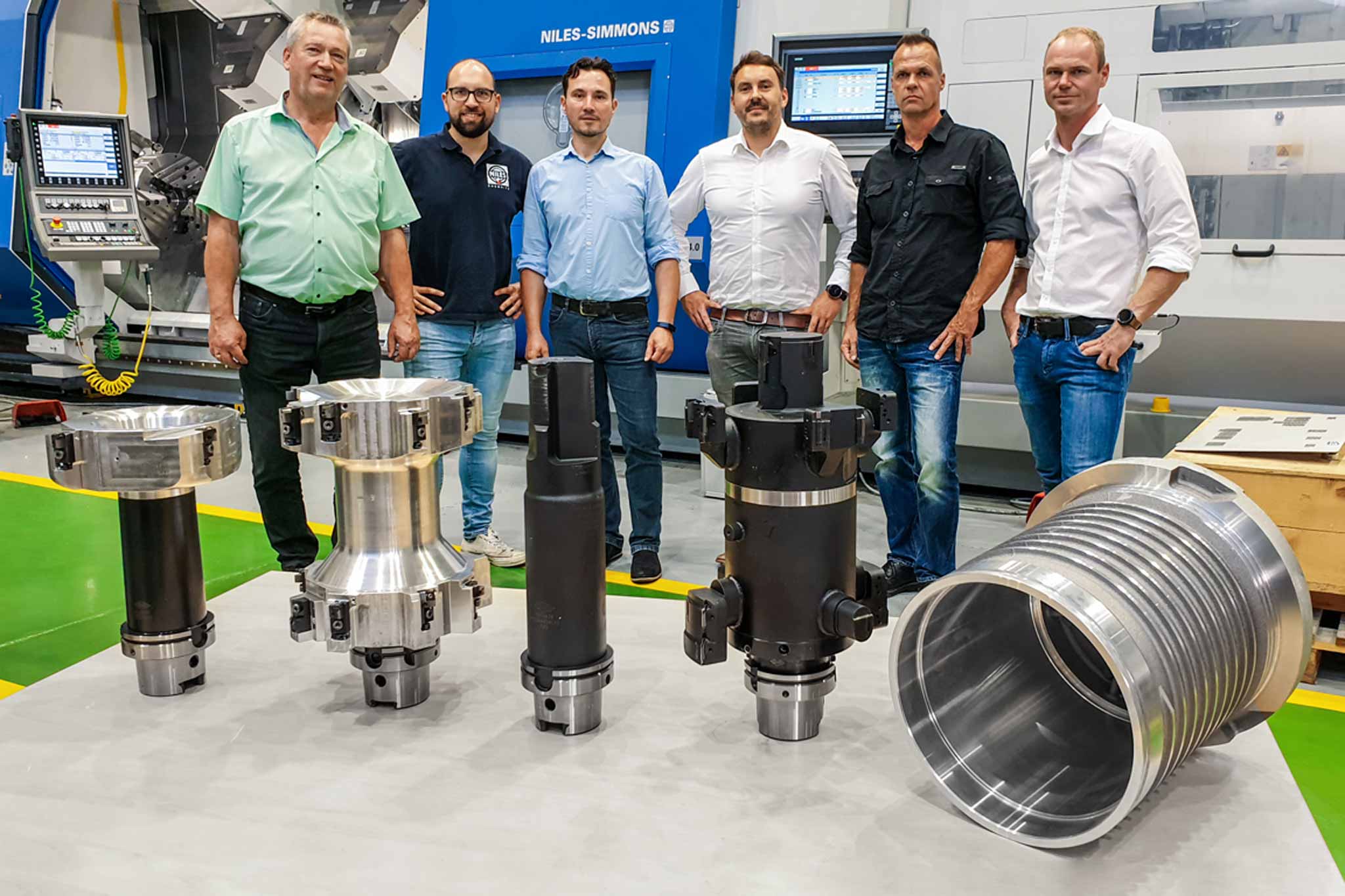
 

Thomas Lötzsch, Christian Winkler and Daniel Pilz from NILES-SIMMONS with André Ranke, Axel Schwarze and Heiko Süß from MAPAL.
Project team (from left): Thomas Lötzsch, Christian Winkler, Daniel Pilz (all from NILES-SIMMONS), André Ranke, Axel Schwarze and Heiko Süss (all from MAPAL).  © MAPAL

A beneficial blend of turning and boring or fine boring
Soon, both sides had the impression that a combination of drilling, boring and fine boring could take machining this key component for e-mobility to a new level. Following the trade show, they set up a joint development project. NILES-SIMMONS rebuilt a machine for the project and MAPAL supplied tools for pre-, semi- and fine machining.
A close-up of the stator housing.
Machining the stator housing includes internal machining with various sections, machining the smaller centre bore and machining the outside with its cooling ribs.   © NILES-SIMMONS-HEGENSCHEIDT GmbH
Pot-shaped parts like stator housings are a frequently used design for electric motors in the automotive industry. The thin-walled aluminium housing features ribs on the outside for the cooling circuit and is installed in the larger motor housing. “Here, we have a rotational workpiece with a rear-side imbalance that can be turned, but, due to the high level of diameter accuracy and the shape and position tolerance required by the market, must be bored and fine bored,” says MAPAL’s Area Sales Manager André Ranke, describing the starting point for the partnership. A customer workpiece was not used for the tests carried out at NILES-SIMMONS with MAPAL technicians as part of the project. Instead, MAPAL designed a dummy that featured all production-ready requirements. The inner diameters vary between 220 mm and 231 mm, and the ou­ter dia­meters between 250 mm and 260 mm. Inner and outer fit tolerances in the IT6 range and cylindrical forms between 20 and 30 µm are required. The concentricity between the different diameters is limited in some cases to 0.05 mm.

Alle Werkzeuge sind bereits in der Maschine

Für die Entwicklung wählte NILES-SIMMONS eine Pick-Up-Drehmaschine vom Typ DZS 315 der ebenfalls in Sachsen ansässigen NSH-Tochterfirma RASOMA. Die Maschine ist modular aufgebaut und kann somit für die jeweilige Bearbeitung passgenau konfiguriert werden. Im Versuchsaufbau wurden eine oben angeordnete vertikale Werkstückspindel, eine unten angeordnete Werkzeugspindel, ein Werkzeugkonsol und ein Werkzeugrevolver eingesetzt. Generell können weitere Bearbeitungseinheiten in die Maschine integriert werden und somit alle notwendigen Werkzeuge in der Maschine untergebracht werden, um Rüst- und Nebenzeiten zu minimieren. Die obere Spindel nimmt das Werkstück auf und verfährt es in einer einzigen Aufspannung mit dem Bettschlitten nacheinander zu den Stationen.
Das Schruppwerkzeug bei der Bearbeitung.
Erster Arbeitsschritt ist das Schruppen der Innenseite des Gehäuses.   © NILES-SIMMONS-HEGENSCHEIDT GmbH

Die vertikale Bearbeitung bietet Vorteile. Zum einen eine platzsparende Verkettung der einzelnen Bearbeitungseinheiten, der optimale Transport von Spänen und Prozesshilfsstoffen sowie eine kompakte Maschinenbauweise mit geringer Aufstellfläche inklusive einem Pick-up System.

„Beim Drehen ist das Pick-up eine übliche Lösung, wie sie bei vergleichbaren Teilen heute schon vielfach genutzt wird. Diese Beladung ist für eine automatisierte Großserienfertigung von Statorgehäusen ideal konzipiert“, berichtet Thomas Lötzsch, Verkaufsleiter bei NILES-SIMMONS. 

Der entscheidende Vorzug des neu entwickelten Prozesses ist die damit mögliche Steigerung der Produktivität. Auf Anhieb ist es gelungen, die Produktionszeit für das Bauteil im kombinierten Dreh-Bohr-Verfahren gegenüber dem konventionellen Drehprozess um 50 Prozent zu verkürzen. Daniel Pilz, der das Projekt bei NILES-SIMMONS leitete, beschreibt, wie die Zeit in den einzelnen Arbeitsschritten eingespart wird, bei denen sich von Fall zu Fall Werkstück, Werkzeug oder beide gleichzeitig drehen.
 

Bewährte Werkzeuge auf neue Weise eingesetzt

Die erste Station dreht den bislang von MAPAL eingesetzten Prozess um. Anstatt das Bauteil mit einem drehenden Werkzeug zu schruppen, steht das Werkzeug in der Maschine still, und nur das von oben kommende Werkstück dreht sich. Weil das Werkzeug von MAPAL im Gegensatz zu einem herkömmlichen Drehmeißel mit vier Schneiden ausgestattet ist, wird für das komplette Vorschruppen der verschiedenen Innendurchmesser am Bauteil nur etwa ein Viertel der Zeit benötigt.
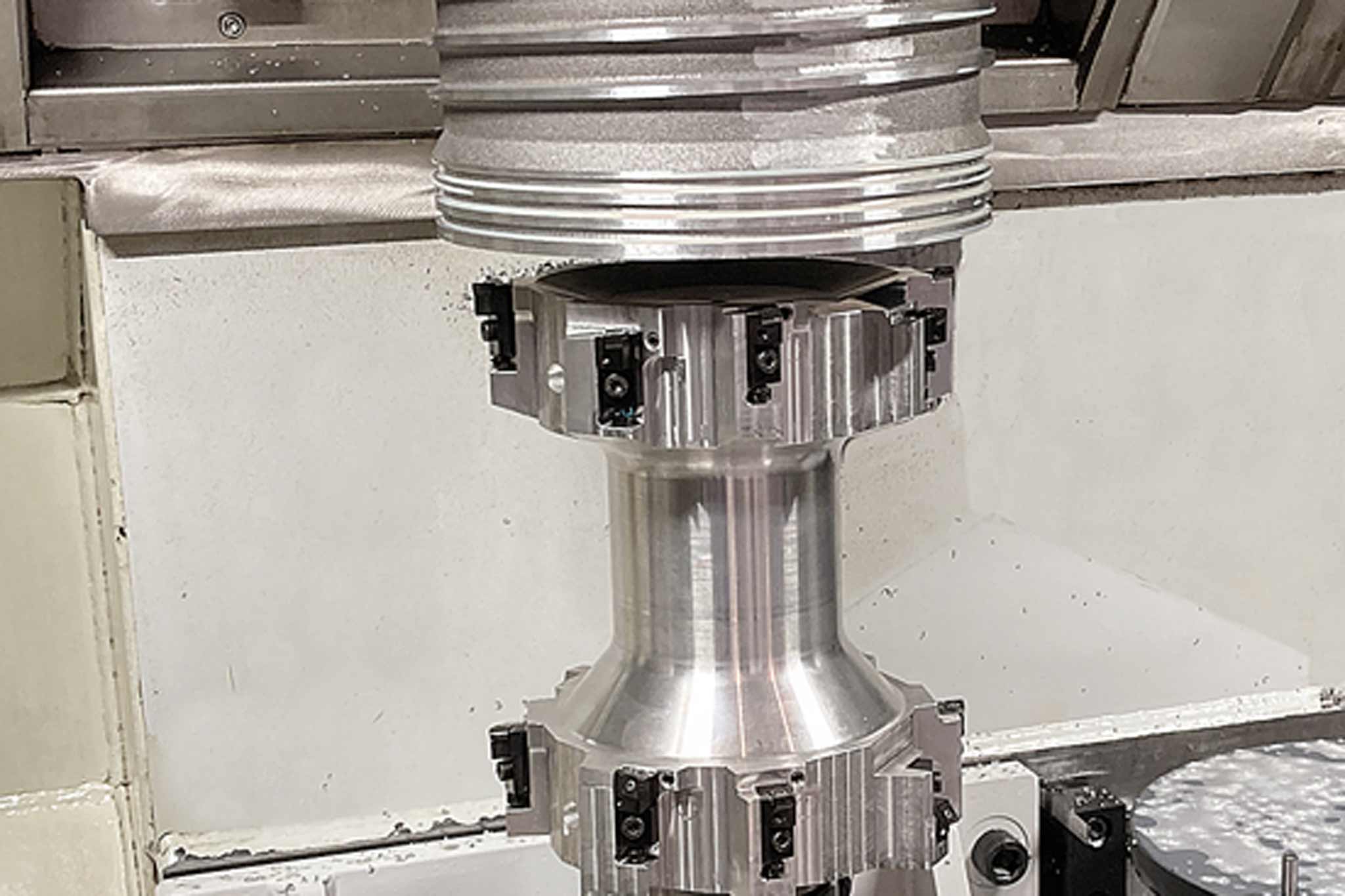
Das Werkstück taucht in den Ringspalt zwischen Außenwerkzeug und Innenwerkzeug.
Bei der simultanen Bearbeitung wird das Werkstück von oben in den Ringspalt zwischen dem Außenwerkzeug und dem Innenwerkzeug gefahren. Bei der Zerspanung wird dabei mit reichlich Kühlschmierstoff gearbeitet.   © NILES-SIMMONS-HEGENSCHEIDT GmbH

Im zweiten Bearbeitungsschritt kommt ein von NILES-SIMMONS eigens entwickeltes Glockenwerkzeug für die Außenkontur in Kombination mit einem MAPAL ISO-Aufbohrwerkzeug für die Semischlichtbearbeitung des Innendurchmessers zum Einsatz. Die Innen- und Außenseite des Werkstücks werden gleichzeitig bearbeitet. „Die Besonderheit ist, dass ein stehendes Außenbearbeitungswerkzeug am Spindelgehäuse angebracht ist. Die Spindel treibt das Innenbearbeitungswerkzeug an“, beschreibt Daniel Pilz den Aufbau. In den von diesen beiden Werkzeugen gebildeten Ringspalt taucht das Werkstück ein. Mit einer einzigen Vorschubbewegung werden alle Durchmesser hergestellt, das sind bei diesem konkreten Bauteil je drei Innen- und Außendurchmesser. Pro Durchmesser sind vier Schneiden eingesetzt. „Zusammen mit dem Vorteil, dass wir innen und außen simultan bearbeiten, kommen wir insgesamt auf nur noch ein Achtel der Zeit, die wir für konventionelles Drehen benötigen würden“, rechnet Pilz vor. Weitere Vorteile sind:

•    Durch die gegenläufigen Schnittkräfte von Innen- und Außenbearbeitung muss am Spannmittel des Werkstücks ein geringeres Drehmoment gehalten werden. 
•    Schwingungen des dünnwandigen Bauteils bei der Bearbeitung werden durch den zeitgleichen Eingriff der Schneiden innen und außen gedämpft.

Die zeitgleiche Innen- und Außenbearbeitung fand bei diesem Versuch mit einer Schnittgeschwindigkeit von 700 m/min statt. Die Bearbeitung im Sandwichverfahren mit dem Werkstück in der Mitte sorgt dafür, dass das Bauteil während der Bearbeitung stabilisiert wird, weil die Schneiden von beiden Seiten gleichzeitig im Eingriff sind und so das Teil führen. Aufwendige Spanntechnik mit Schwingungsdämpfung erübrigt sich damit, was sich bei den Kosten bemerkbar macht. Während die Industrie das Werkzeug von MAPAL bereits auf horizontalen Bearbeitungszentren zur Innenbearbeitung von Statorgehäusen einsetzt, wurde das glockenförmige Außenwerkzeug von NILES-SIMMONS neu entwickelt und der innovative Prozess zum Patent angemeldet.
 

The finishing tool in use.
Fine machining of all inner diameters is done with a fine boring tool.   © NILES-SIMMONS-HEGENSCHEIDT GmbH
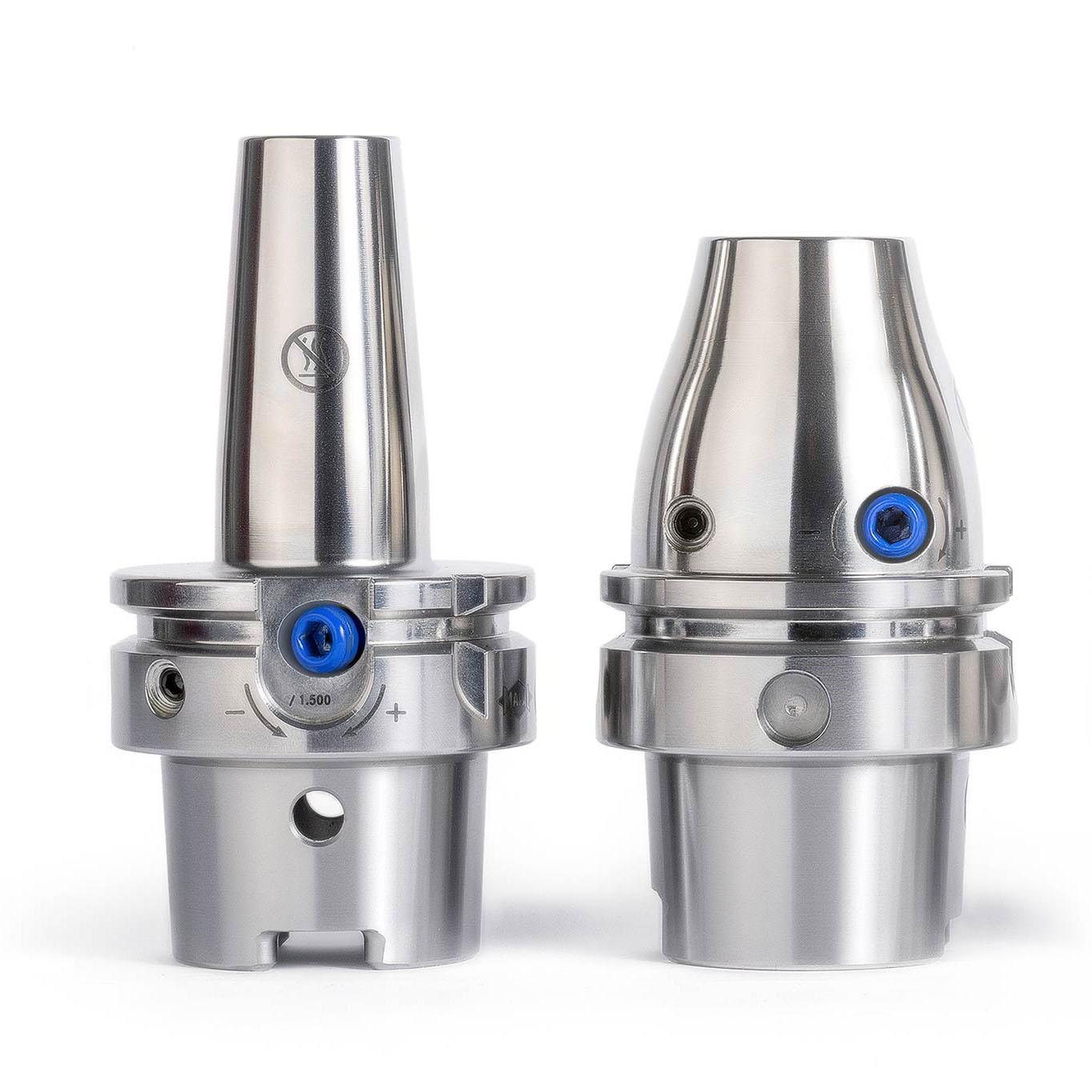
The subsequent fine machining process uses an already tried-and-tested MAPAL fine boring tool with guide pads, which is ultimately used to fully finish the centre bore for the stator bearing, including all stages. MAPAL produces the fine boring tool used in various designs. A welded design with blades and guide pads made from PCD was used for the tests in Chemnitz. The diameter can be adjusted in the µm range.

The stator housing is the new crankshaft

NILES-SIMMONS expects the manufacturing of stator housings to become as important to electric mobility as crankshafts were to combustion engines in the past. The expected quantities, cycle times and costs are in a comparable range. “Enquiries for these parts amount to 250,000 parts per year,” says CEO Klaus Kräher. By 2030, there may be demand for as many as 20 to 50 million parts worldwide. “A 50 percent time saving is a huge statement, especially as there is definitely more potential in our new process,” says Kräher.
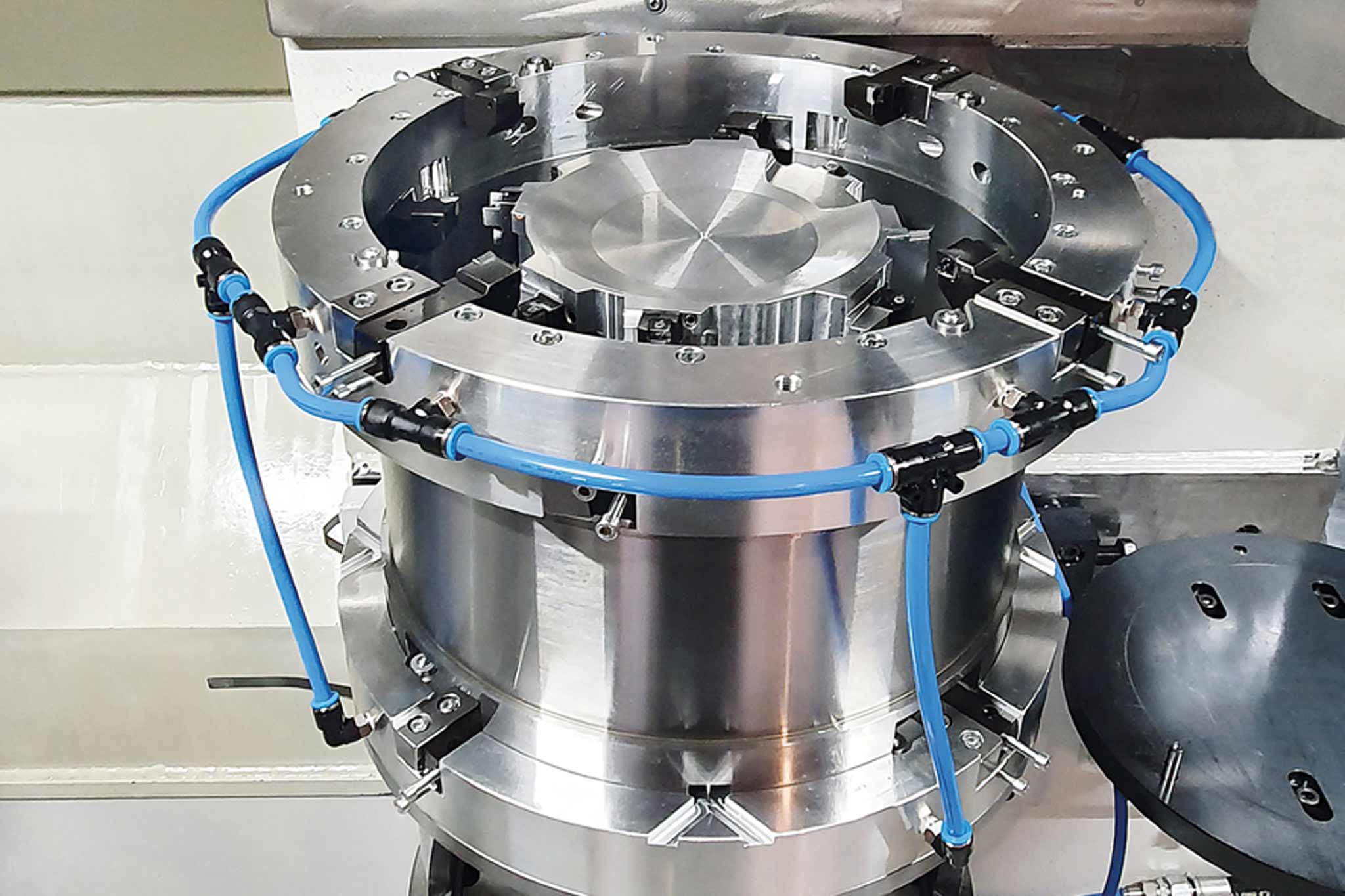
The semi-finishing tool for inner machining is surrounded by a bell-shaped outer tool.
The semi-finishing tool for inner machining is clamped in the lower spindle. It is surrounded by the bell-shaped outer tool, which is securely mounted.   © NILES-SIMMONS-HEGENSCHEIDT GmbH

In addition to the successfully implemented vertical concept, NILES-SIMMONS is also investigating the possibility of refitting existing horizontal machines. The Chemnitz-based company has over 300 turn-broaching and crankshaft milling machines currently in use in car manufacturers’ crankshaft production lines worldwide. Both the innovative process and MAPAL’s tools can also be integrated into a horizontal version of the concept. MAPAL also offers the possibility of using additively-manufactured tools in which weight savings are not the sole focus and coolant outlets can be geared even more specifically towards the cutting edge.

Apart from the machining of stator housings, the process can also be used for other workpie­ces from a wide range of sectors, such as cooling elements for hybrid engines, pipe and flange couplings for the oil and gas industry, bearing and housing components for general machining, and workpieces for the plastics industry. This makes this process relevant for a very wide range of different workpieces with tube- and pot-shaped geometry requiring tolerances less than or equal to IT6 and with ultra-precise shape and position tolerance.



Kathrin Rehor, PR Project Manager bei MAPAL

Kontakt

Kathrin Rehor Public Relations Kathrin.Rehor@mapal.com Tel.: +49 7361 585 3342


Weitere Artikel aus dem Bereich Case Studies