04.12.2023

Aluminiumzerspanung in neuen Dimensionen

Hochvolumenfräser von MAPAL bei bavius

Auf seinem neuen High-End-Modell HBZ AeroCell 160 konnte der Werkzeugmaschinenhersteller bavius mit einer neuen Generation von Aluminium-Hochvolumenfräsern des Werkzeugherstellers MAPAL beeindruckende Zeitspanvolumen von über 20 Litern pro Minute erreichen. Das Ergebnis dieser erfolgreichen Zusammenarbeit kommt für die Flugzeugindustrie zur rechten Zeit: Sie startet nach der Corona-Delle wieder voll durch.
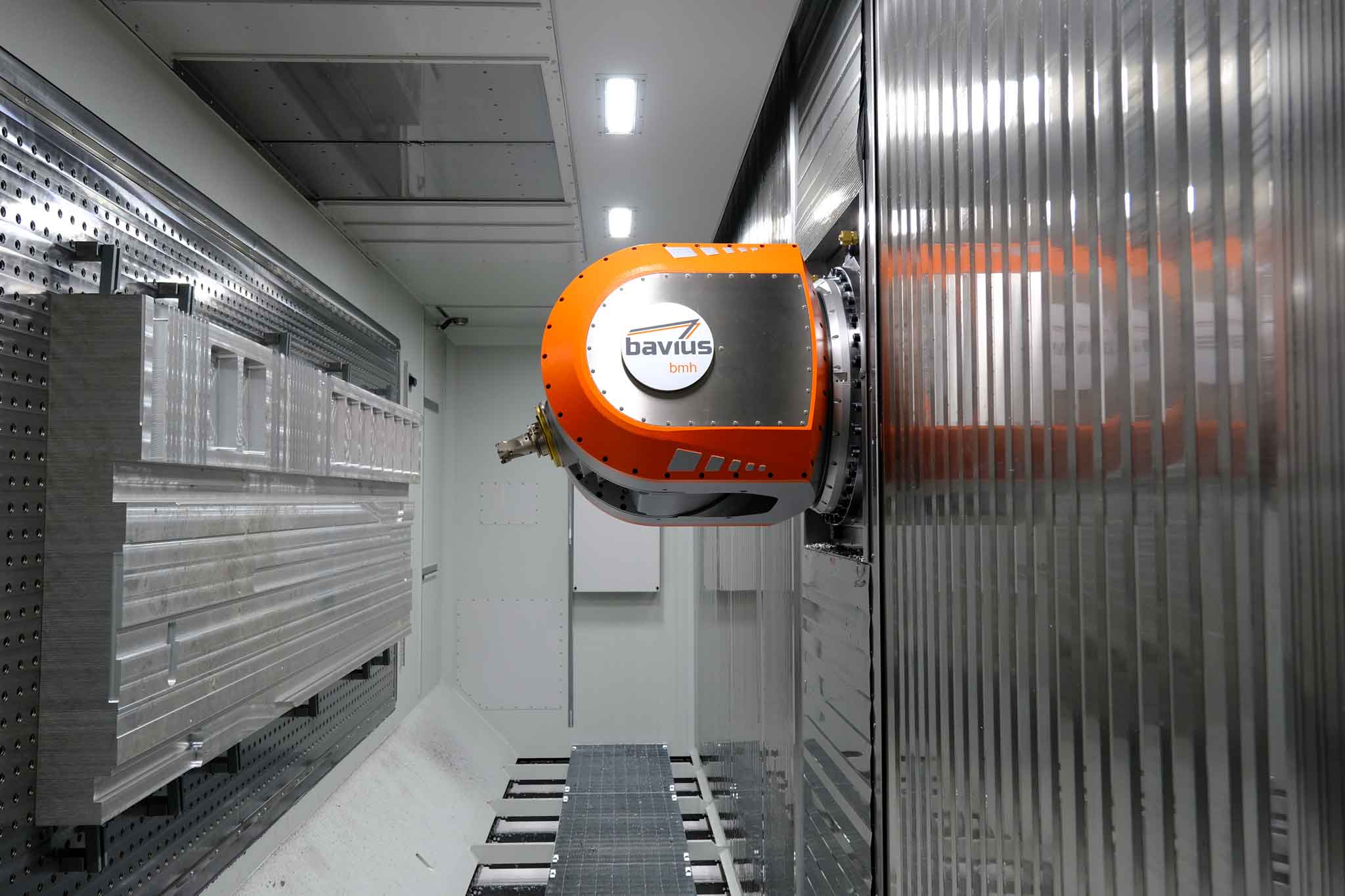
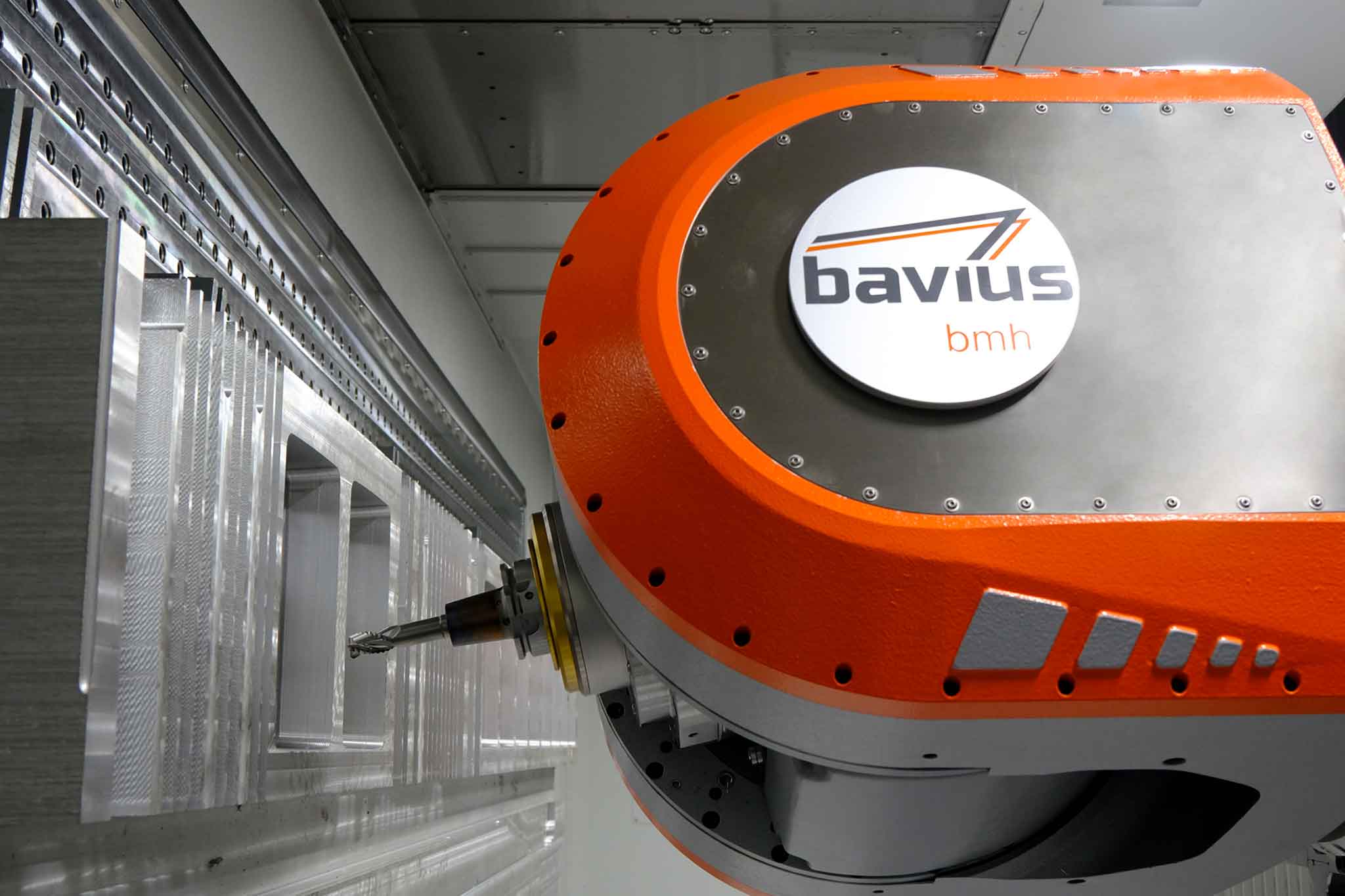
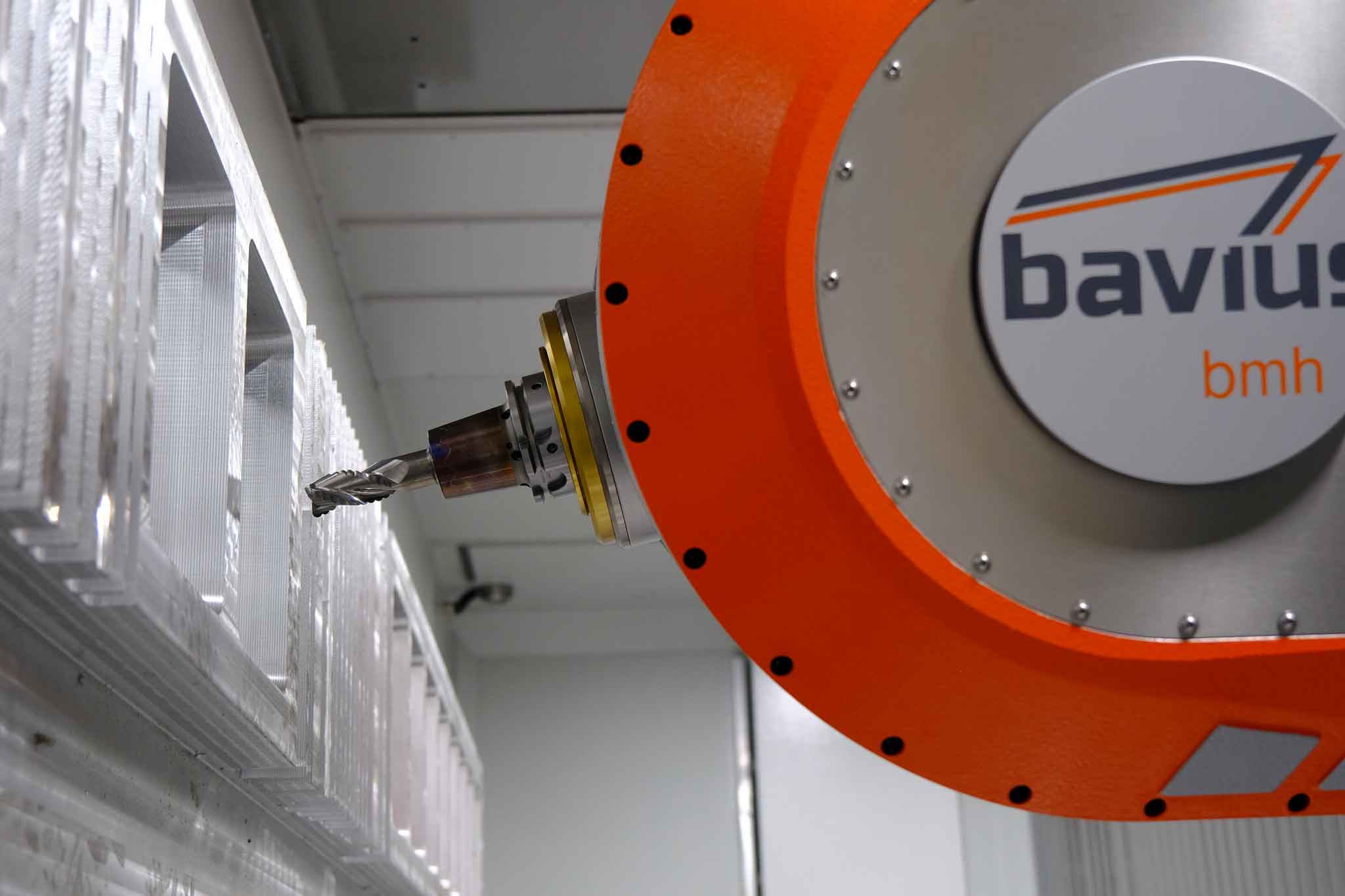
Das Bild zeigt den Innenraum der bavius Maschine mit großer Aluminiumplatte und dem eingespannten Fräser OptiMill-Alu-Wave.
  • Das Bild zeigt den Innenraum der bavius Maschine mit großer Aluminiumplatte und dem eingespannten Fräser OptiMill-Alu-Wave.
  • Das Bild zeigt den Innenraum der bavius Maschine mit großer Aluminiumplatte und dem eingespannten Fräser OptiMill-Alu-Wave.
  • Das Bild zeigt den Innenraum der bavius Maschine mit großer Aluminiumplatte und dem eingespannten Fräser OptiMill-Alu-Wave.
  • Zu sehen ist der NeoMill-Alu-QBig eingespannt in die Maschine.
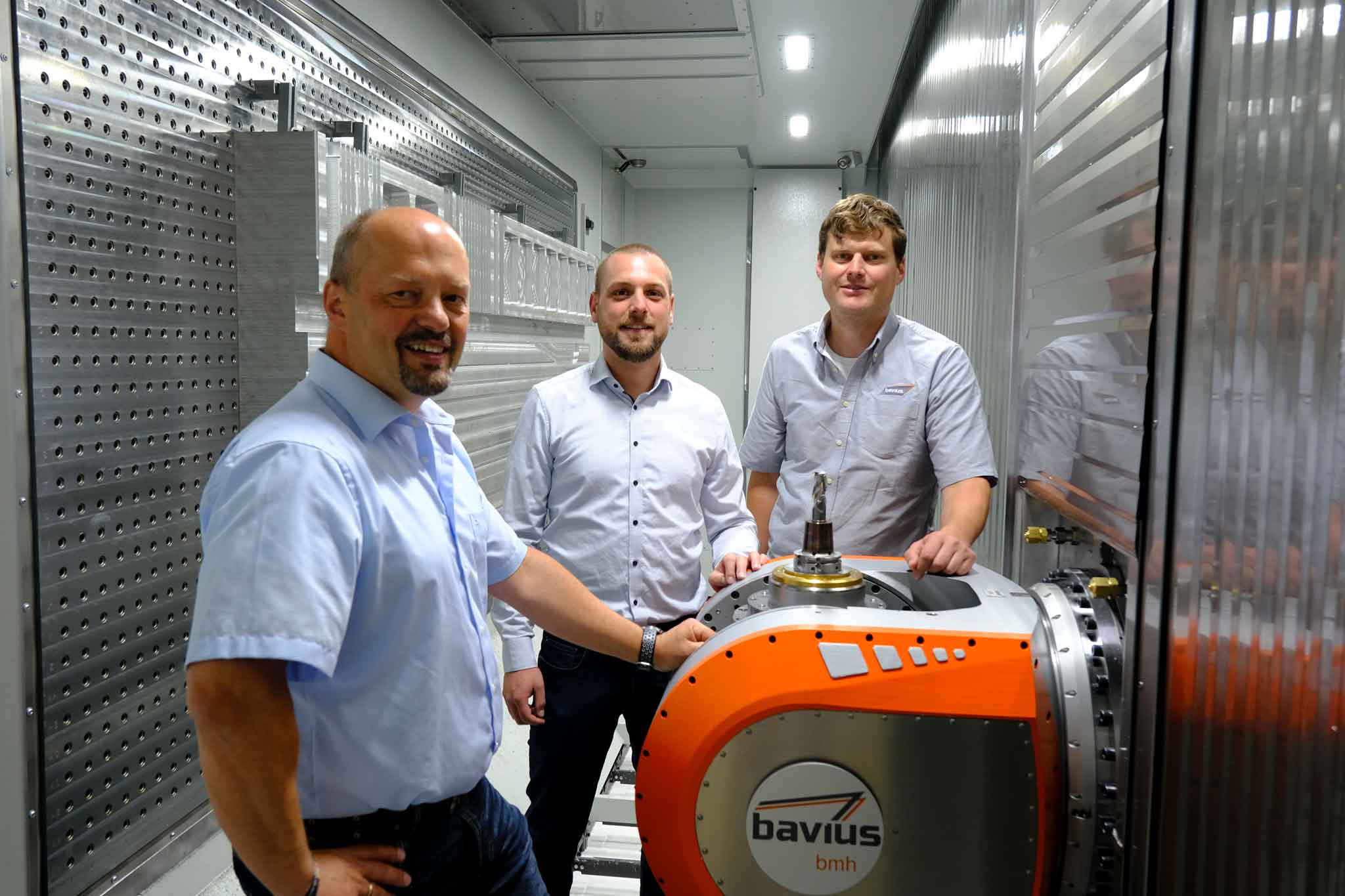
  • Im Maschinenraum stehen Thomas Jungbeck, Tim Rohmer und Stefan Diem.
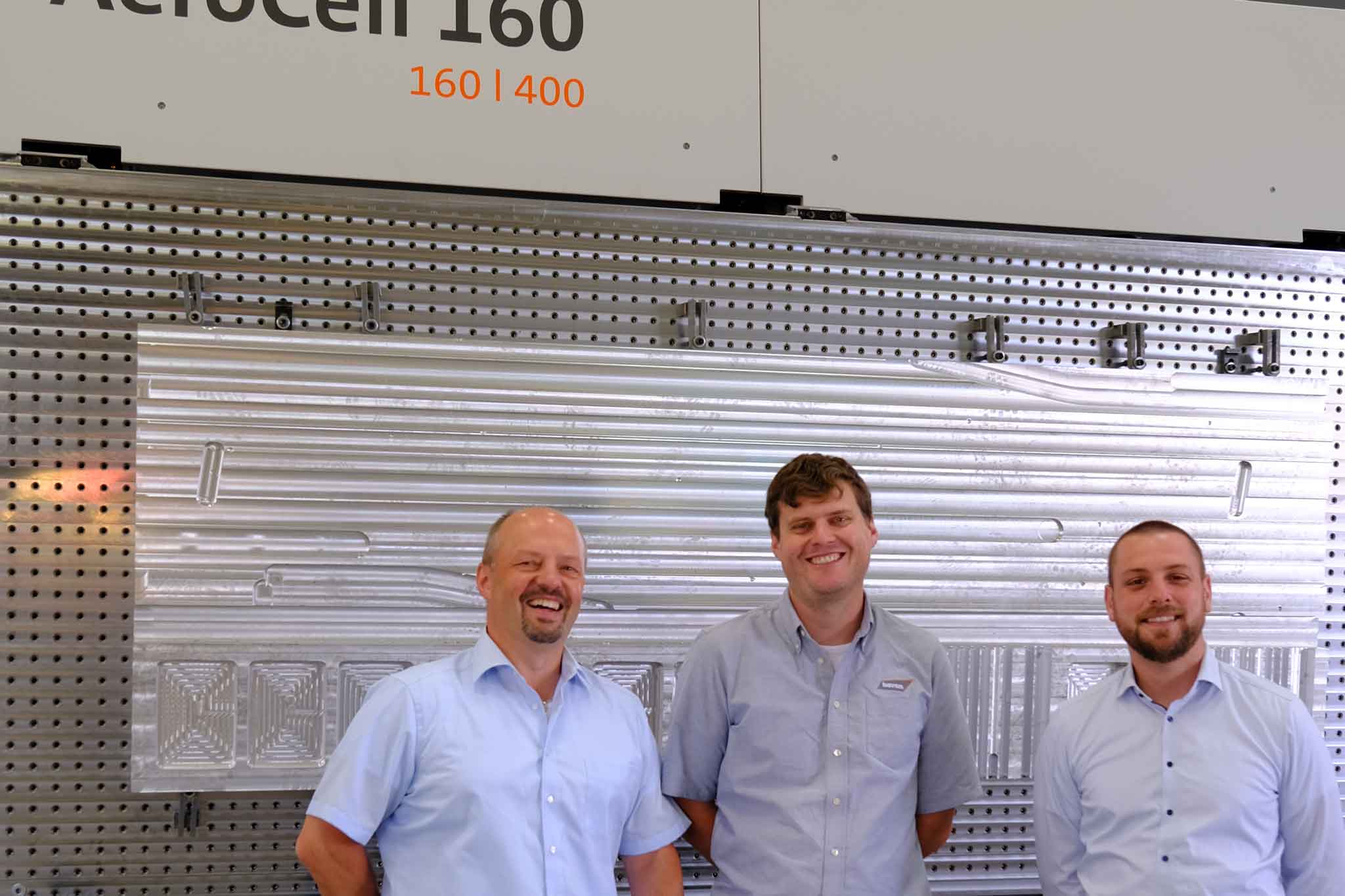
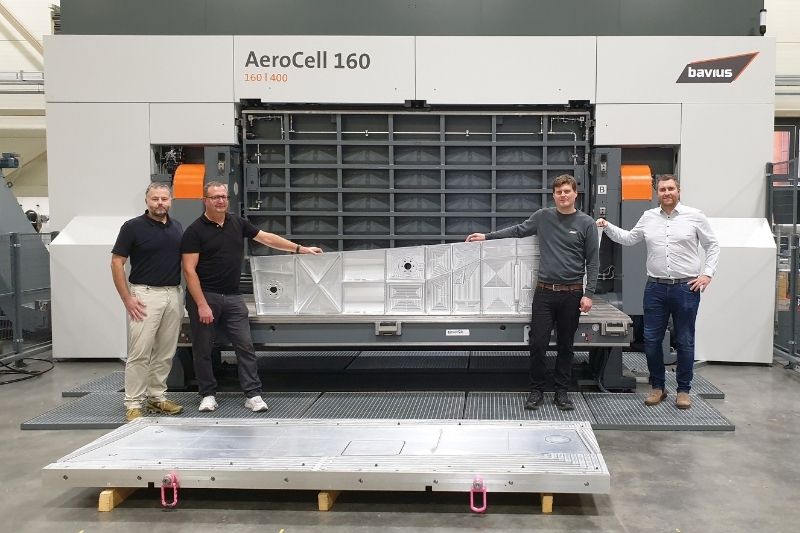
  • Vor der bavius AeroCell 160 stehen Thomas Jungbeck, Stefan Diem und Tim Rohmer.
  • Das bavius Horizontalbearbeitungszentrum AeroCell 160 ist im Gesamten zu sehen.
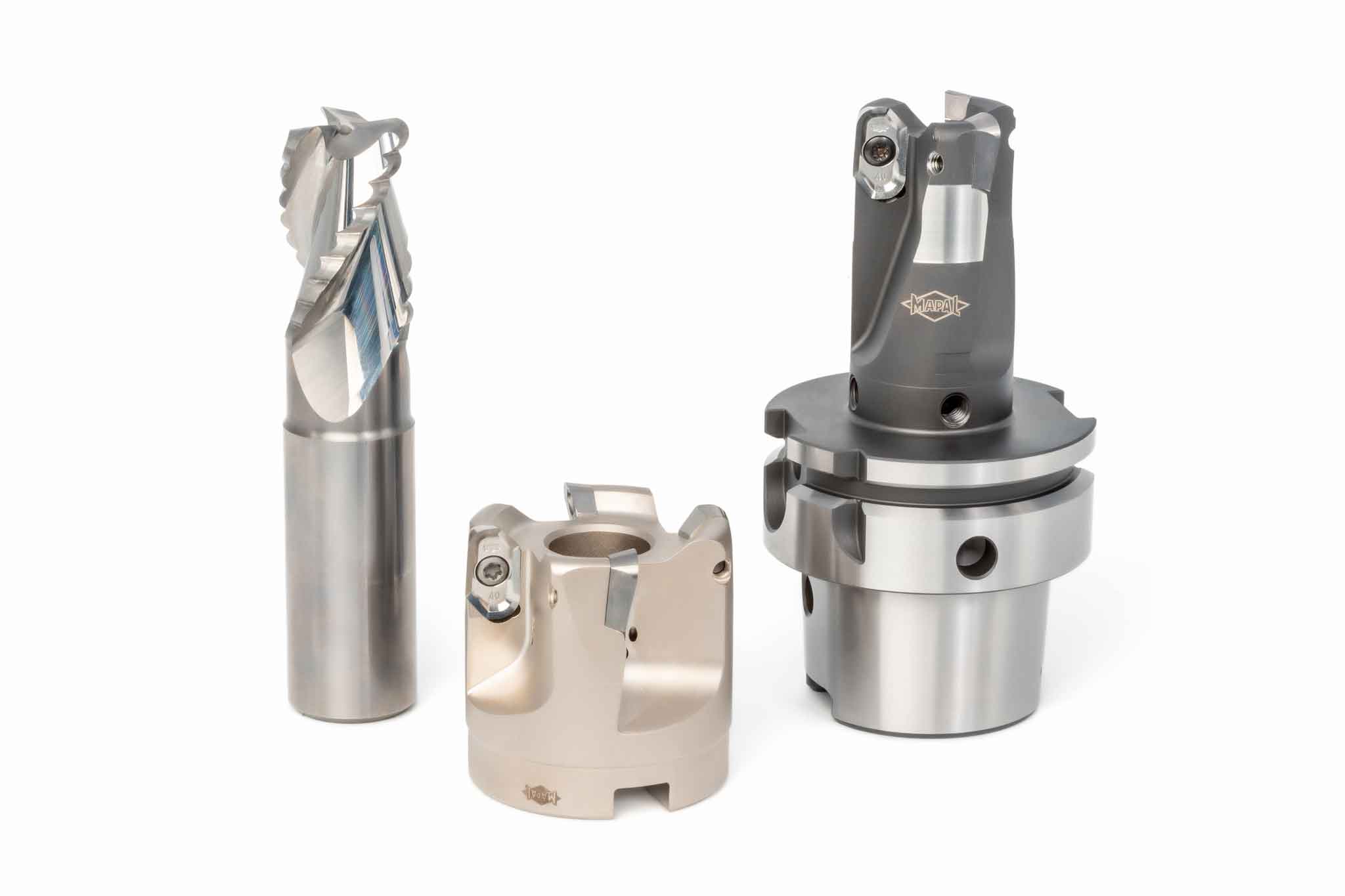
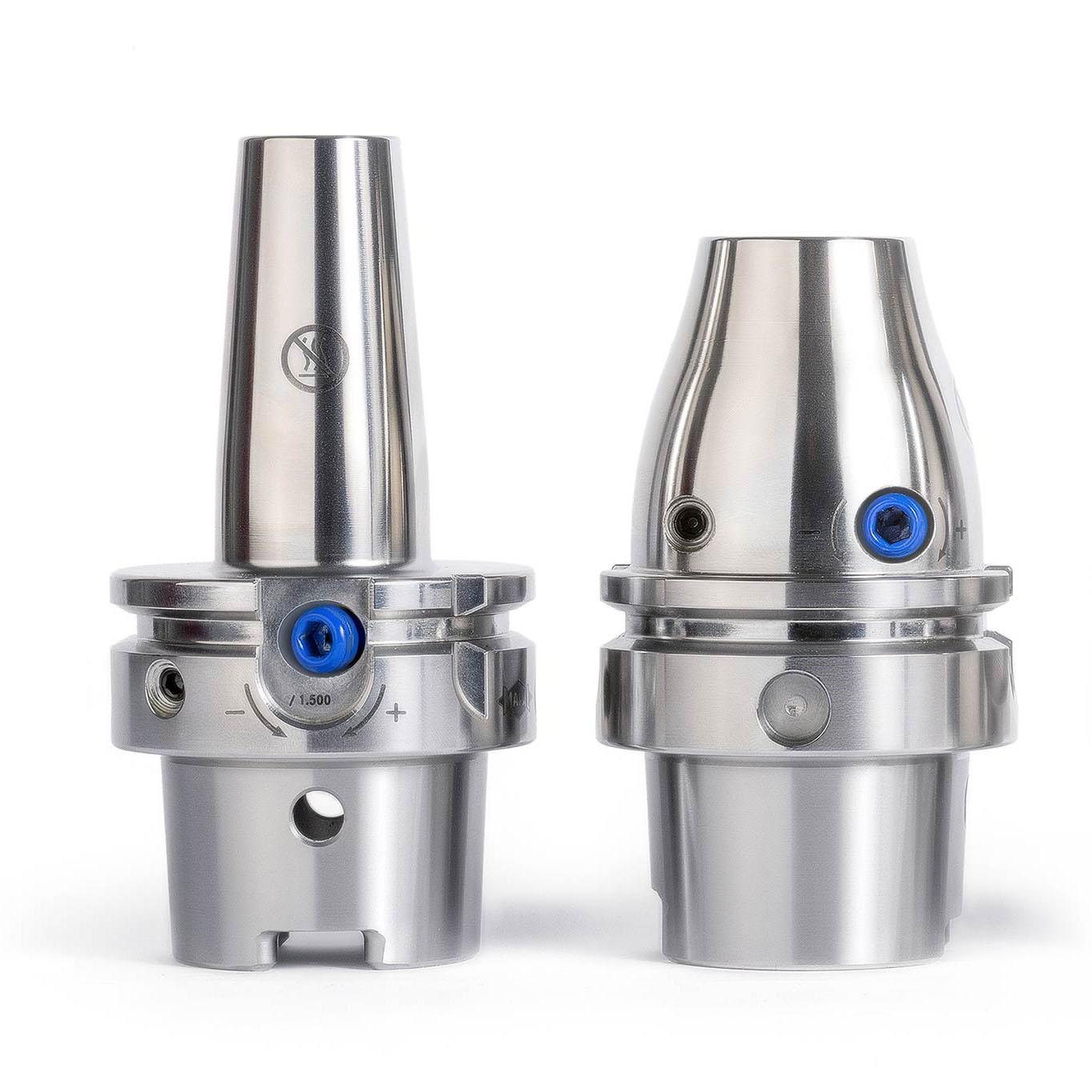
  • An OptiMill-Alu-Wave next to two variants of the NeoMill-Alu-QBig.
The machine manufacturer, which emerged from the Handtmann Group, has been operating as an independent company under the name bavius technologie gmbh since a management buy-out in 2017 and has its headquarters in Baienfurt. Despite all the changes, the business area has remained the same for almost four decades. CNC machining centres are designed and built for the precise high-speed machining of large workpieces made of aluminium.
The picture shows the interior of the bavius machine with a large aluminum plate and the clamped OptiMill-Alu-Wave milling cutter.
The OptiMill-Alu-Wave is a new and improved version of the solid carbide roughing cutter from MAPAL. For the tests, the milling cutter with the largest available diameter of 25 mm was used and ran with a spindle power of up to 175 kW. It achieved a material removal rate of 20 dm3/min.   ©bavius
“Over 80 percent of our work is for the aerospace industry, where our AeroCell machines are used primarily to produce large structural parts”, explains Amit Paranjape, Sales Manager at bavius. Customers are aircraft manufacturers and their first and second tier suppliers. Large volumes are required to make full use of the bavius systems. There are currently two different machine lines from Baienfurt. The PBZ profile machining centres are used, among other things, to machine seat tracks for aircraft. The HBZ horizontal machining centres are used to manufacture large structural parts from solid. “Everything long and wide is machined here”, explains Paranjape. “Users can machine all the necessary parts for the airframe of an aircraft on our machines.” The material removal rates are extreme, as one example from a bavius customer shows, who mills out finished parts weighing only 35 kilograms from blanks weighing 1.3 tonnes.

Trend towards horizontal machining

The aerospace industry is undergoing a transformation in terms of machine concepts. After decades of preferring to work on gantry machines or vertical machining centres, horizontal machines are now preferred for new investments, where the components are clamped upright and the spindle is moved horizontally. The main advantage of the horizontal design is the easier removal of the large quantity of chips, which practically fall into the chip conveyor by themselves.

At bavius, it’s clear that the aerospace industry has recovered from Covid. Passenger numbers have already returned to pre-pandemic levels and are continuing to rise. As a result, new planes are needed again, which keeps machine manufacturers busy. Demand in Germany, France, Spain and other countries reveals that there is a lot of investment in Europe again. Dynamic machines with high spindle power are particularly sought after.
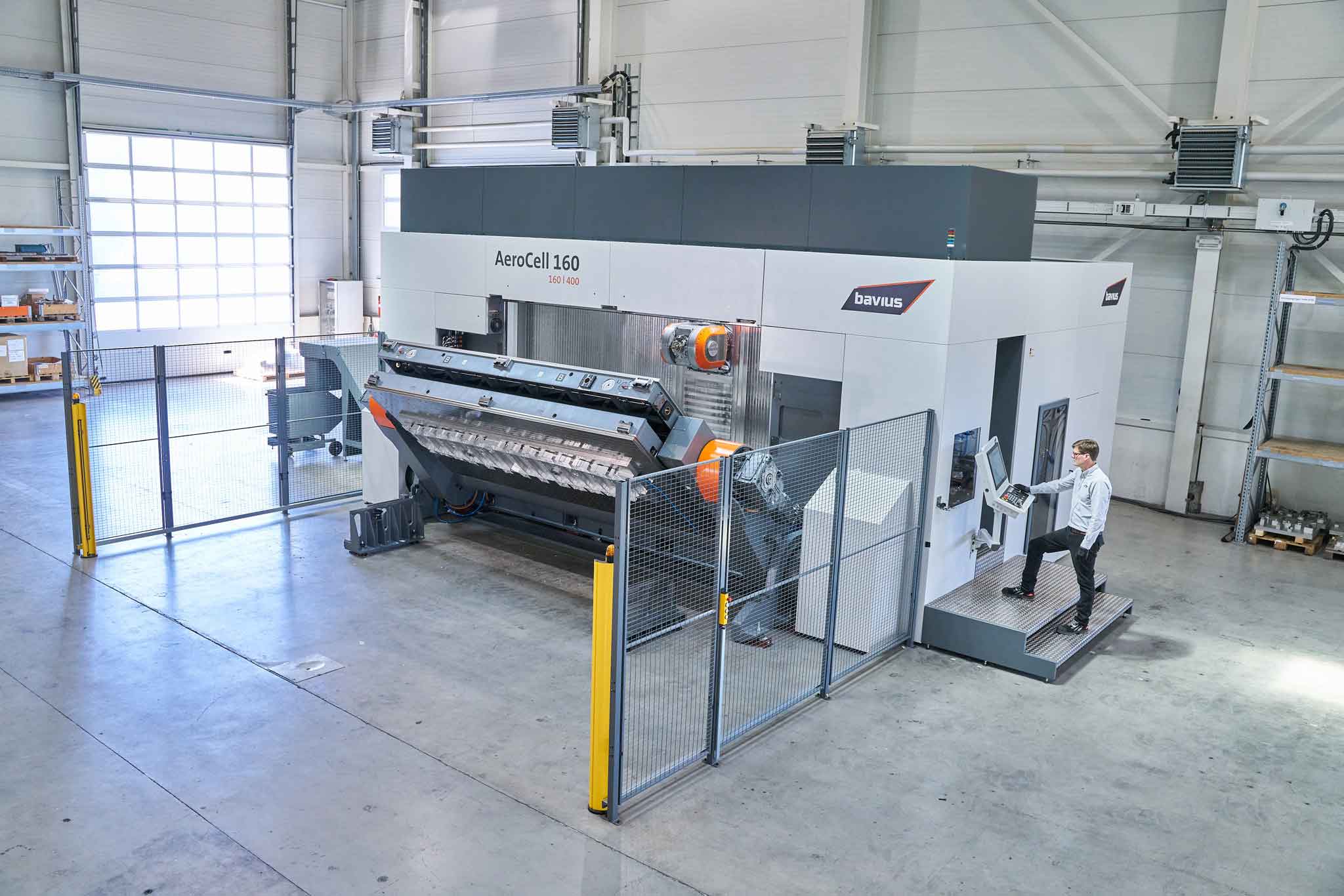
 

The bavius horizontal machining center AeroCell 160 can be seen as a whole.
The bavius horizontal machining centre AeroCell 160 for the high-speed machining of aluminium structural parts up to 1600 x 4000 mm.   ©bavius
bavius is currently expanding its high-end series HBZ AeroCell with the new AeroCell 160. With a range of mechanical changes, the manufacturer also achieves even greater dynamics with the new machine. Modifications in automation reduce non-productive times. Instead of functioning with hydraulic arms, it is now electrically powered. With the set-up station in front of the machine, a complete pallet change takes two to three minutes. If the pallet is already connected with the part, this takes less than a minute. Tool change has also been optimised with a chip-to-chip time now of 12 seconds.

To the limits and beyond

The AeroCell 160 is designed for maximum material removal rates in aluminium. A powerful jet of coolant and a widened chip conveyor ensure that no chip particles can build up anywhere. “Thanks to our concept, we avoid problems that occur with gantry machines. In this way, we can optimally deploy modern tools”, explains Stefan Diem, Application Engineer at bavius. In order to test new machines and at the same time provide customers with references, bavius carries out milling tests that push them to their limits and beyond. “Lots of customers want to see evidence first before they buy a machine”, admits Diem.
Thomas Jungbeck, Tim Rohmer and Stefan Diem are in the machine room.
Have achieved the best results in aluminium machining in close cooperation (from left): Thomas Jungbeck (Technical Consultant, MAPAL), Tim Rohmer (Product Manager Solid Carbide Milling Tools, MAPAL) and Stefan Diem (Application Engineer, bavius).   ©bavius
It is important for the machine manufacturer to use the most efficient tools currently available for the tests, which are then also available for customer demonstrations. bavius regularly tests various manufacturers’ tools. Due to the tight production deadlines, there are not many options. “To save time, it is important for us to have a good exchange with the tool manufacturer”, says Stefan Diem. “We’ve had a good relationship with MAPAL for many years and have always been very pleased with the roughing and finishing tools. I appreciate our close collaboration with MAPAL. We receive excellent advice and are in good hands.”
An OptiMill-Alu-Wave next to two variants of the NeoMill-Alu-QBig.
With the OptiMill-Alu-Wave and the NeoMill-Alu-QBig, MAPAL showcases a complete range of products for high-volume machining of aluminium materials at EMO 2023.   ©MAPAL

Because milling cutters from the OptiMill-SPM series had previously been used at bavius and performed very well, MAPAL was asked again. It was perfect timing: the tool manufacturer had just finished developing a new solid carbide roughing cutter, the OptiMill-Alu-Wave, and also offered the new aluminium high-volume milling cutter NeoMill-Alu-QBig with indexable inserts for larger diameters.

The milling tests are kept simple in design but put the tools through their paces. bavius mills a series of flutes in a large aluminium plate for this. Stefan Diem takes a very pragmatic approach: “if the tool can do the flute, we can also use it to mill pockets and do any other machining.” This means that the determined cutting data can be directly applied to customer parts.
 

The tool could do even more

The picture shows the interior of the bavius machine with a large aluminum plate and the clamped OptiMill-Alu-Wave milling cutter.
The OptiMill-Alu-Wave is a new and improved version of the solid carbide roughing cutter from MAPAL. For the tests, the milling cutter with the largest available diameter of 25 mm was used and ran with a spindle power of up to 175 kW. It achieved a material removal rate of 20 dm3/min.   ©bavius

Für die Versuche mit dem OptiMill-Alu-Wave wählte bavius den mit 25 mm größten Durchmesser dieses dreischneidigen Fräsers. Bei einer Spindeldrehzahl von 25.465 min-1 und einer Schnittgeschwindigkeit von 2.000 m/min wurde sukzessive die Spindelleistung erhöht. Das beste Zeitspanvolumen mit rekordverdächtigen 20 dm3/min lieferte Nut Nummer 6. Dieser Testdurchgang wurde mit einer Spindelleistung von 175 kW gefahren, wobei ein Drehmoment von 66 Nm auftrat, zugestellt wurden 30 mm. Bei Versuchen mit höheren Leistungen stoppte die Maschine. „Das Werkzeug kann man voll ausfahren, der limitierende Faktor ist die Spindel“, kommentiert Diem das Ergebnis. „Mit dem 25 mm OptiMill-Alu-Wave haben wir eine neue Dimension in der Aluminiumzerspanung erreicht. Der Fräser ist definitiv besser als alles, was wir bisher eingesetzt hatten.“

Als Auszugsicherung setzte bavius das Safe-LockTM-System ein. „In diesem Drehzahlbereich ist eine symmetrische Auszugssicherung sehr wichtig, um keine Unwucht zu erzeugen“, erläutert Tim Rohmer, Product Manager Vollhartmetall-Fräswerkzeuge bei MAPAL. Eine Weldon-Fläche, wie sie bei solchen Werkzeugen oft als Auszugssicherung angebracht werde, sei hier die falsche Lösung. Um die Laufruhe der Maschine zu gewährleisten, führe auch bei symmetrischen Werkzeugen an sorgfältigem Wuchten kein Weg vorbei.

Bei den Tests in Baienfurt war man zudem mit der erreichten Oberflächenqualität sehr zufrieden. Die Kordelgeometrie des OptiMill-Alu-Wave sorgt für optimale Spanbildung. Das polierte Nutprofil gewährleistet reibungslosen Abtransport der Späne, den die Zentralkühlung des Werkzeugs im Zusammenspiel mit der externen Kühlung in der Maschine unterstützt.

In weiteren Versuchen wurden Taschen in die Aluminiumplatte gefräst, wobei noch ein Zeitspanvolumen von 16 Litern bei sehr guten Oberflächen erreicht wurde. Für Anwendungstechniker Thomas Jungbeck und Component Manager Alexander Follenweider, die die Versuche für MAPAL begleitet haben, ist das ein Beleg für die sehr gute Dynamik des bavius Bearbeitungszentrums: „Oft bleiben andere Maschinen in den Ecken stehen und bewirken hohe Vibrationen. Das tritt bei der AeroCell überhaupt nicht auf, die fast ungebremst um die Ecken fährt.“ 
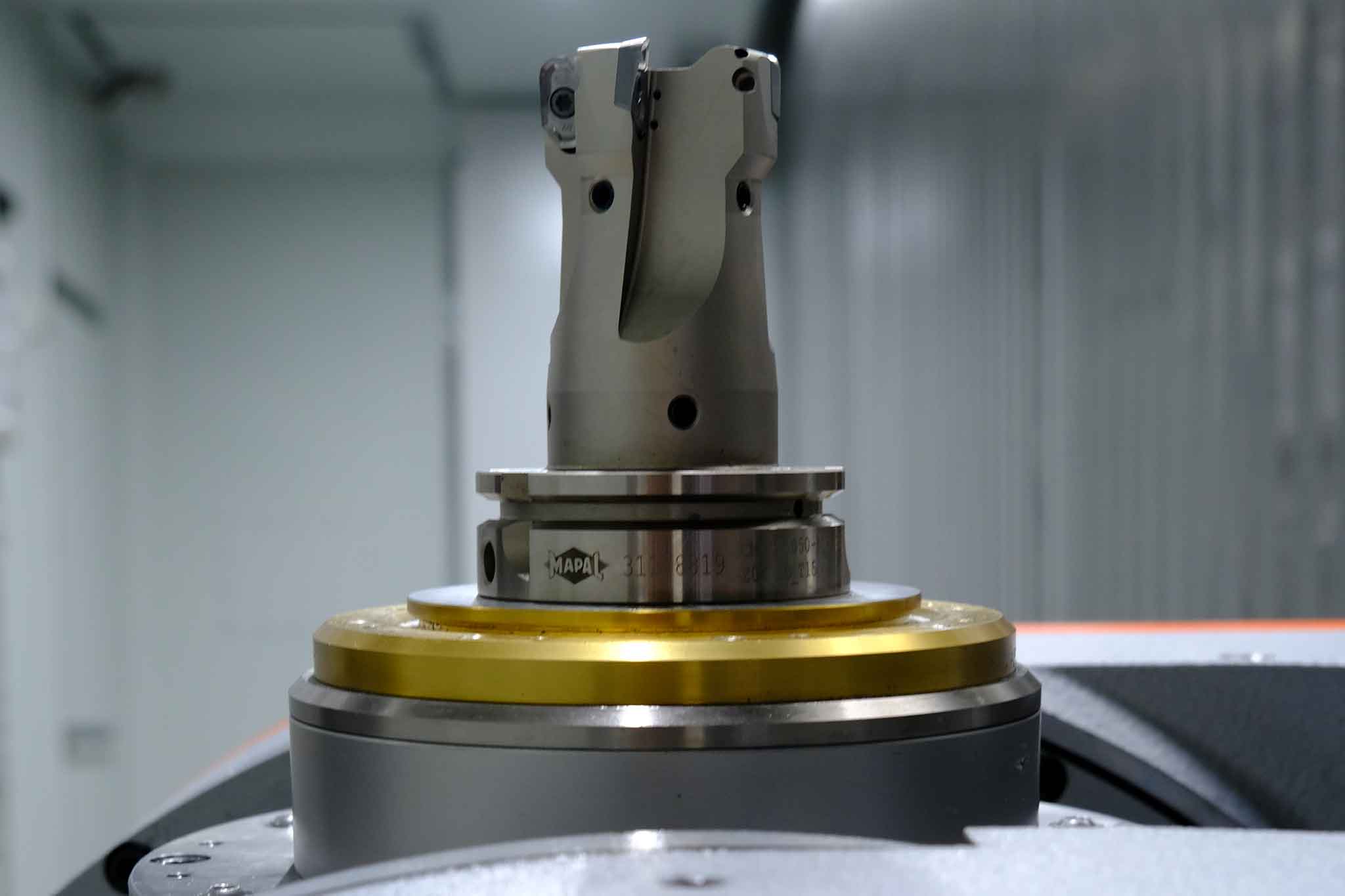
 

Zu sehen ist der NeoMill-Alu-QBig eingespannt in die Maschine.
Als Wendeschneidplattenwerkzeug ist der neue Aluminium-Hochvolumenfräser NeoMill-Alu-QBig von MAPAL eine wirtschaftliche Lösung für größere Durchmesserbereiche. In den Versuchen überzeugte der 50-mm-Fräser mit hoher Stabilität und Laufruhe. Mit ihm wurde ein Zeitspanvolumen von 18,4 dm3/min erreicht.   ©bavius

Überaus positiv fielen auch die Versuche mit dem neuen Wendeplattenwerkzeug NeoMill-Alu-QBig von MAPAL bei bavius aus, wofür der Durchmesser 50 mm gewählt wurde. Der Aluminium-Hochvolumenfräser schaffte ein Zeitspanvolumen von 18,4 dm3/min. Auf der Maschine überzeugte der Fräser mit seiner hohen Stabilität und Laufruhe und geringen Schnittkräften. Für den Einsatz bei Drehzahlen bis zu 35.000 min-1 hat MAPAL den Grundkörper mit vier Gewindebohrungen zum Feinwuchten versehen. Die hochgenau umfanggeschliffenen Wendeschneidplatten erreichen Oberflächengüten von Ra 0,8 µm und Rz 4 µm bei der Vor- und Fertigbearbeitung. Sie sind mit polierter Spanleitstufe versehen, um den Reibwiderstand und die Hitzeentwicklung zu reduzieren. Auch wurde Gewicht eingespart, um Fliehkräfte zu reduzieren. „Bei größeren Durchmessern sind Fräser mit Wendeschneidplatten die wirtschaftlichere Lösung“, grenzt Heiko Rup, Produktmanager für Werkzeuge mit Wendeschneidplatten, sie gegenüber Vollhartmetallfräsern ab.

Beim Durchmesser 25 mm gehen die beiden Systeme ineinander über. „Manche unserer Kunden greifen nach Möglichkeit immer zu den kostengünstigeren Wendeschneidplatten, andere ersparen sich lieber einen zusätzlichen Arbeitsgang und machen mit dem Vollhartmetallfräser weiter“, berichtet Stefan Diem. Mit verschiedenen möglichen Radien seiner Werkzeuge gibt MAPAL den Anwendern Flexibilität. 

Mit dem Horizontalbearbeitungszentrum AeroCell 160 und den Aluminium-Hochvolumenwerkzeugen bieten bavius und MAPAL Anwendern eine Kombination, die die Bearbeitung von Strukturbauteilen auf ein neues Niveau hebt.



Kathrin Rehor, PR Project Manager bei MAPAL

Kontakt

Kathrin Rehor Public Relations Kathrin.Rehor@mapal.com Tel.: +49 7361 585 3342


Further items about the technologie area