30.06.2022
Noch wirtschaftlicher zum Turbolader
Radiales Standard-Fräsprogramm NeoMill von MAPAL
Die Transformation der Mobilität ist in vollem Gange. Und damit liegt das Augenmerk in der Entwicklung auf neuen Bauteilen. Es ist jedoch unbestritten, dass noch viele Jahre Motoren mit Turboladern produziert werden. Daher ist in der zerspanenden Fertigung das Bestreben nach Werkzeuglösungen mit höheren Schnittwerten, längeren Standzeiten und damit reduzierten Kosten pro Bauteil nach wie vor sehr groß. MAPAL hat sein Werkzeugportfolio für Turboladergehäuse erweitert, um die Komplettbearbeitung noch produktiver realisieren zu können.
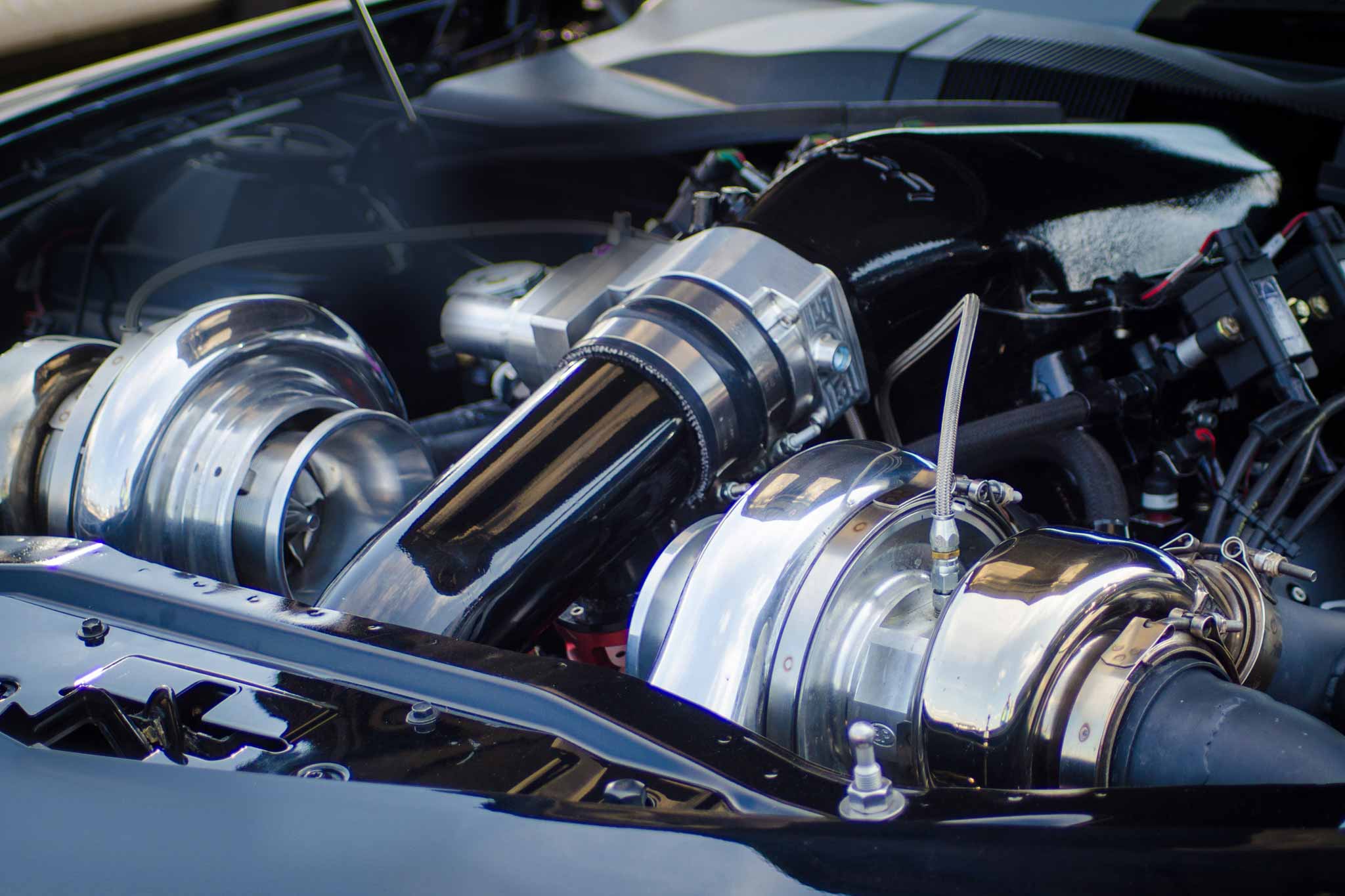
Turboladergehäuse sind besonders lohnende Bauteile für Optimierungen in der Produktion, da ihre Zerspanung mit sehr hohem Verschleiß verbunden ist. Während bei anderen Fahrzeugteilen wie Zylinderkurbelgehäusen, Achsschenkeln oder Bremssätteln Werkzeugstandzeiten bei mehreren Tausend Teilen liegen, ist in der Fertigung von Turboladern in Abhängigkeit von Bearbeitungslänge und Werkstoff meist bei 30 bis 140 Bauteilen Schluss. Typische Turbolader-Materialien tragen die Bezeichnungen 1.4847, 1.4848, 1.4849 oder 1.4837, die jeweils auf hitzebeständigen Stahlguss im nichtrostenden Bereich hinweisen – ein äußerst abrasives Material.
„Wenn wir es hier schaffen, zehn Teile mehr mit einem Werkzeug zu bearbeiten, hat das einen sehr großen Effekt auf die Werkzeugwechselkosten und damit die Kosten für das Bauteil“, erläutert Heiko Rup, Produktmanager für Werkzeuge mit Wendeschneidplatten. Bei Bohr- und Senkoperationen sowie der Konturbearbeitung ist MAPAL als Partner etabliert. Mit den im vergangenen Jahr vorgestellten NeoMill Fräsern stellt der Präzisionswerkzeughersteller nun die komplette Turboladerfertigung wirtschaftlich dar.
Mit neuen Fräsern zum Komplettanbieter
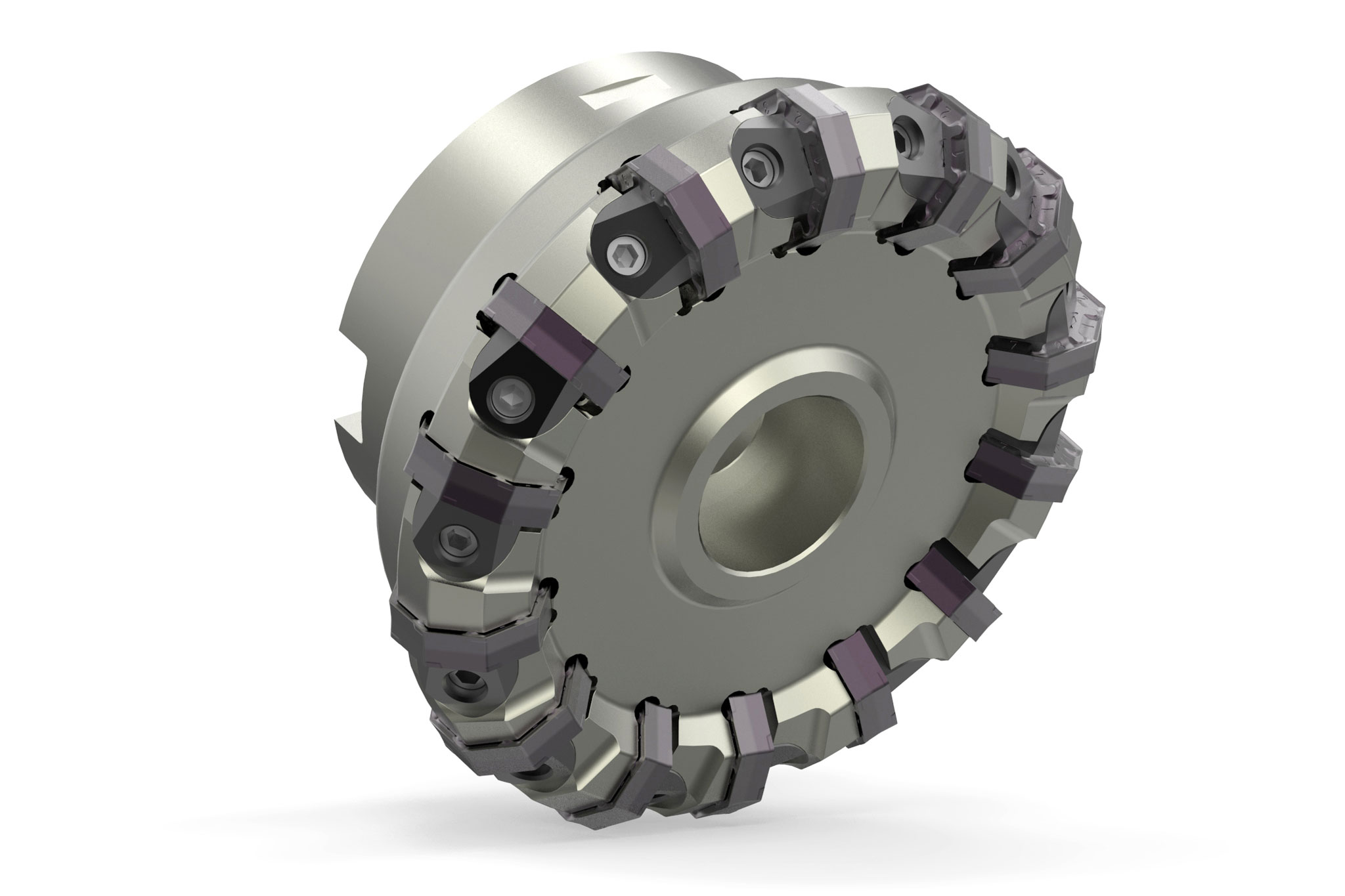
MAPAL has become a complete supplier for machining turbocharger housings with two milling cutters from the NeoMill portfolio: the face milling cutter NeoMill-16-Face and the shoulder milling cutter NeoMill-4-Corner. The face milling cutter machines the connecting surfaces of the manifold and exhaust flange on the turbocharger housing. A diameter range from 63 to 200 mm is offered with indexable inserts with 16 cutting edges. Only minimal cutting force occurs during machining.
Because of the clamping of the workpiece, tool restrictions can occur, in which case a shoulder milling cutter is required instead of a face milling cutter. The NeoMill-4-Corner shoulder milling cutter is equipped with four-edge indexable inserts, whose cutting edges also have a negative form. MAPAL developed a new chip guiding stage for this milling cutter especially for difficult to machine materials. For heat-resistant cast steel and stainless steels, it creates less cutting force and thus machines with minimal burr formation. The shoulder milling cutter is available for smaller diameter ranges from 25 to 100 mm.
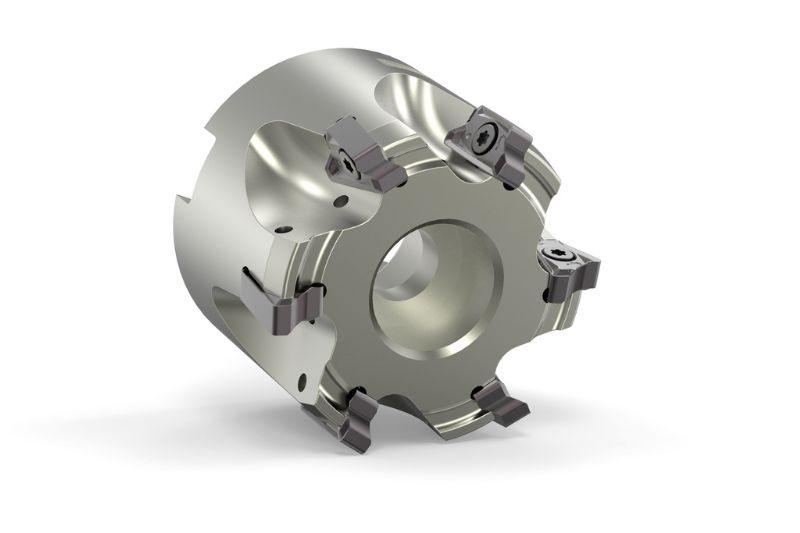
In practice, turbochargers are machined both wet and dry. Thus, a wide variety of cutting material is available in the NeoMill range, which are optimised for dry machining, wet machining or machining with minimum quantity lubrication.
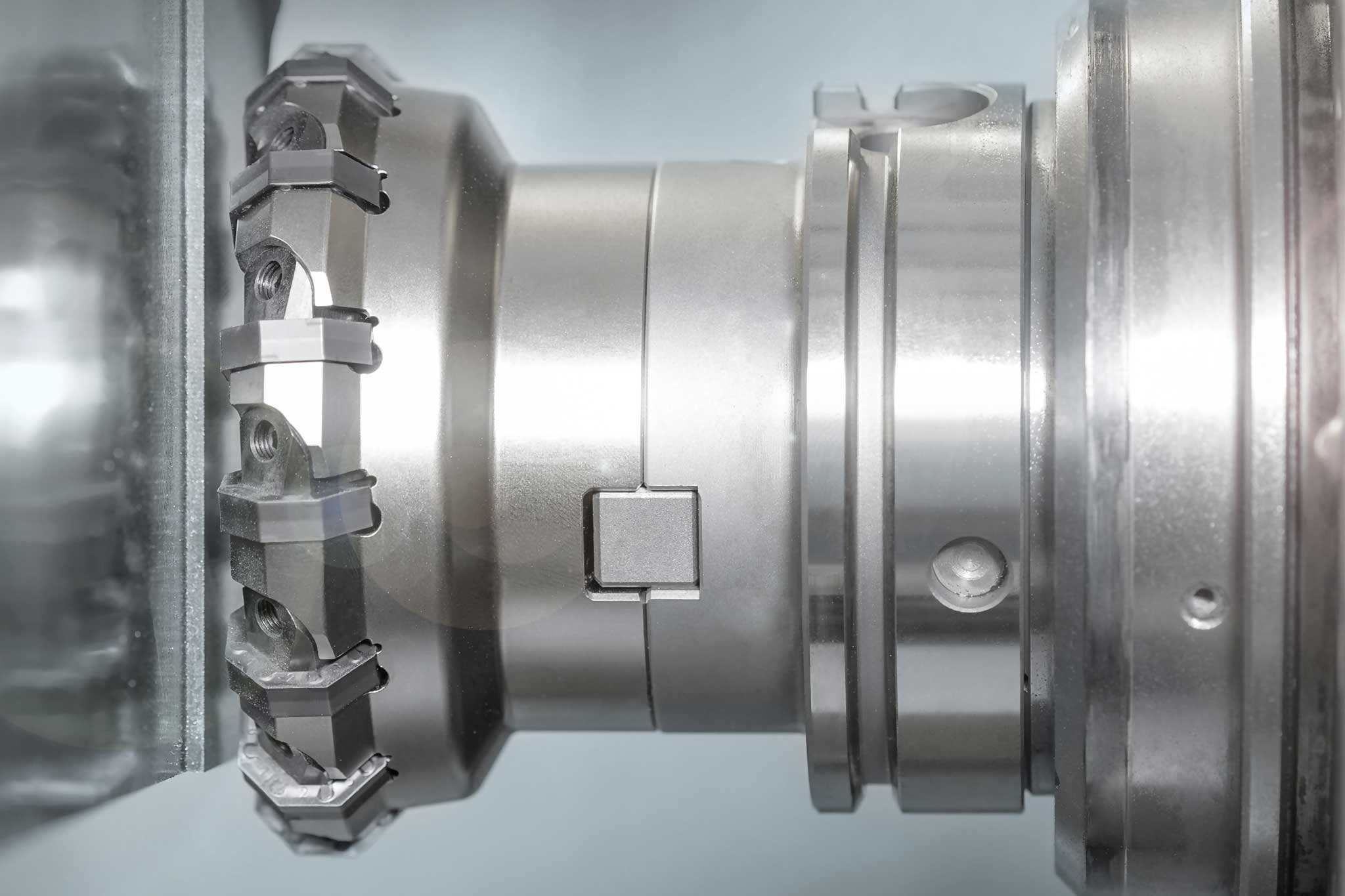
Due to the high degree of wear and tear, test of new tools quickly delivers tangible results. These have led many manufacturers to replace their old milling cutter with NeoMill.
Cost per part halved

Contact
Kathrin Rehor Public Relations Kathrin.Rehor@mapal.com Phone: +49 7361 585 3342