29.07.2025
Serienreife Lösung für die Statorbearbeitung
NILES-SIMMONS und MAPAL setzen neue Standards
Der vom Chemnitzer Werkzeugmaschinenhersteller NILES-SIMMONS und Werkzeughersteller MAPAL entwickelte Prozess zur Komplettbearbeitung von Statorgehäusen für Elektromotoren in Fahrzeugen ist in der Serienfertigung angekommen.
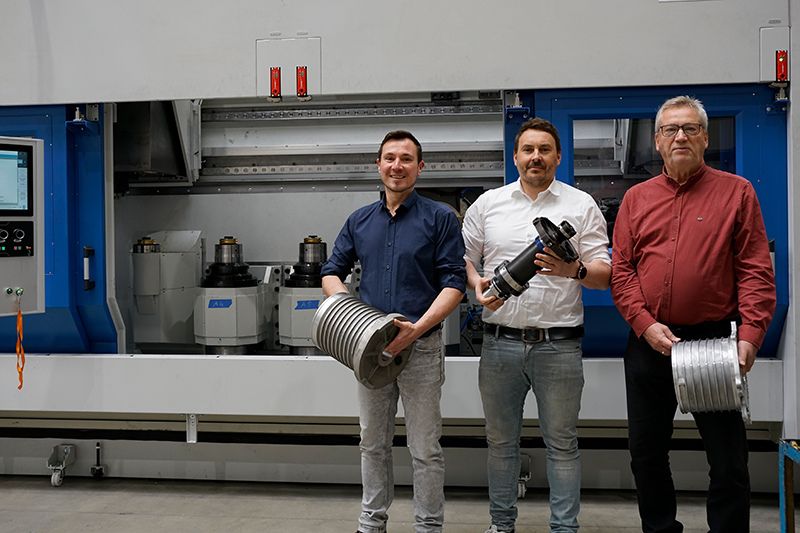
Die beiden Hersteller hatten vor kurzem in einem Entwicklungsprojekt demonstriert, dass auf einer Pick-Up-Drehmaschine eine sehr wirtschaftliche und hochpräzise Produktion von Statorgehäusen möglich ist. Die dünnwandigen Aluminiumbauteile werden für den Antrieb in Elektrofahrzeugen benötigt. Sie sind auf der Außenseite mit Rippen für den Kühlkreislauf versehen und werden in die größeren Motorgehäuse eingebaut.
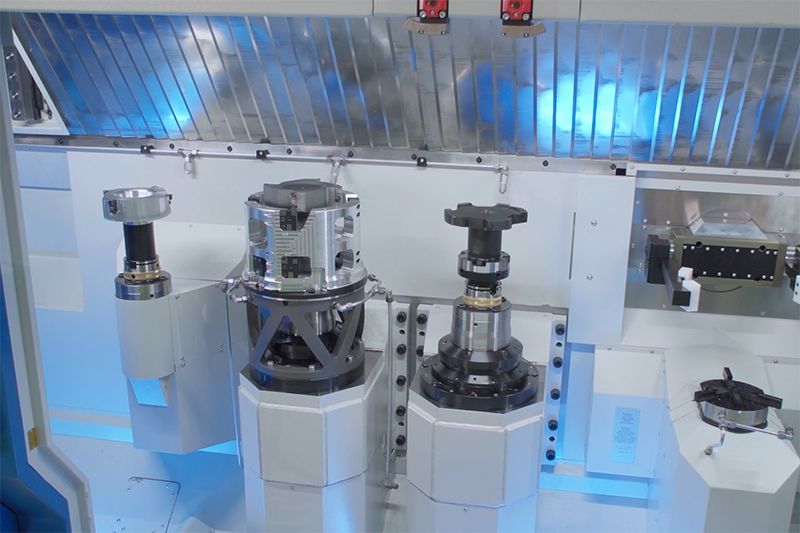
War während der Entwicklung bei NILES-SIMMONS noch mit einer dafür umgebauten modularen Drehmaschine gearbeitet worden, so kam nun eine eigens für die Statorfertigung konzipierte Maschine auf den Markt. Die Entwicklungsbasis bildete das Vertikalbearbeitungszentrum der Marke RASOMA, welche genau wie NILES-SIMMONS eine Marke der NSH Group (NILES-SIMMONS-HEGENSCHEIDT GmbH) ist. Beide Marken sind gemeinsam in der NSH Group Tochterunternehmung NSH TECHNOLOGY organisiert und haben die Entwicklung gemeinsam vorangetrieben. Die Bezeichnung RASOMA DZS 400-2 indiziert, dass sie mit zwei Werkstückspindeln arbeitet.
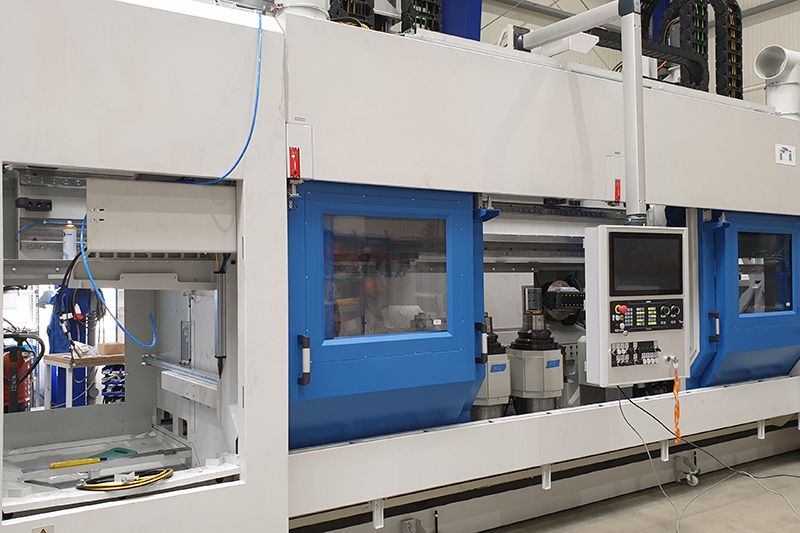
Für den Einsatz in der Serienfertigung wurde die Maschine an den Seiten mit einem Pickup-Bereich für die Rohteile und einem Dropdown-Bereich für die fertigen Teile versehen. Zu- und Abfuhr der Bauteile erfolgt über Transportbänder. Bei manueller Bestückung kann über die Automation ein Puffer von zehn bis zu 20 Bauteilen genutzt werden. So ist das Bedienen mehrerer Anlagen möglich, während der Mitarbeiter fertigungsbegleitend anderen Prozessen nachgehen kann. „Wir haben damit standardmäßig eine einfachste Automatisierung realisiert, für die keine Roboter oder Absperrungen an der Maschine benötigt werden. Der Bediener kann die Teile direkt auf ein Palettenband legen“, erläutert Thomas Lötzsch, Sales Manager bei NSH TECHNOLOGY. Eine vollautomatisierte Werkstückbe- und -entladung mehrerer Maschinen mit einem zentralen Fördersystem ist optional möglich. Die Maschine lässt sich leicht in eine bestehende Produktionsumgebung integrieren, wozu auch das relativ kompakte Aufstellmaß von 7,50 x 2,60 m beiträgt. Die Grundlage für die Gestaltung der RASOMA DZS 400-2 war in Zusammenarbeit mit LTH Castings entstanden, einem Partner mit langer Erfahrung im Bereich Gießen und Spezialist für die Zerspanung komplexer, hochwertiger und dünnwandiger Komponenten aus Druckguss-Aluminium. Die Ausgestaltung berücksichtigte so direkt Praxiserfahrungen und Anforderungen von Anwendern.
Komplettbearbeitung in zwei Aufspannungen
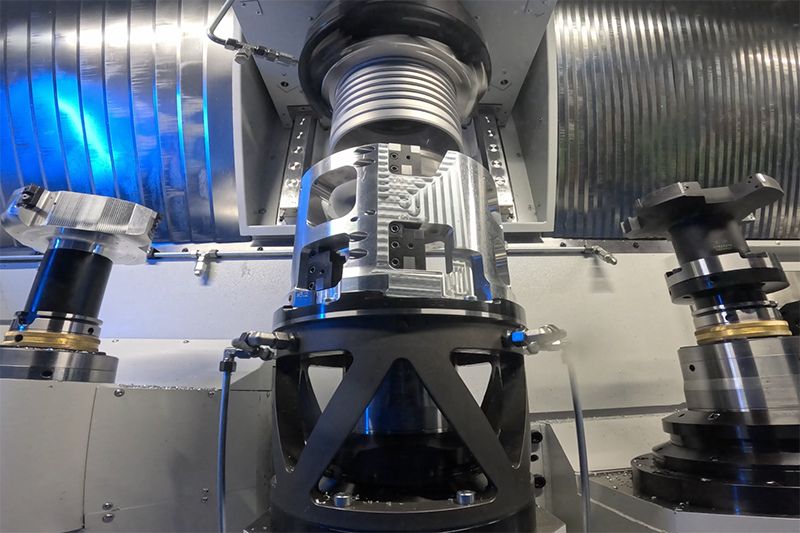
Zwischen Pickup und Dropdown erfolgt die Komplettbearbeitung der Bauteile auf der Vertikalmaschine in zwei Aufspannungen. Von oben nimmt ein Spannmittel das Werkstück zunächst auf und fährt es nacheinander an verschiedene Bearbeitungsstationen in der Maschine. Auf einer Umspannstation im Arbeitsraum wird das Teil um 180 Grad gedreht und von der zweiten Werkstückspindel für die Fertigbearbeitung aufgenommen. Während der zweiten Aufspannung beginnt parallel an der ersten Aufnahme die Bearbeitung des nächsten Bauteils.
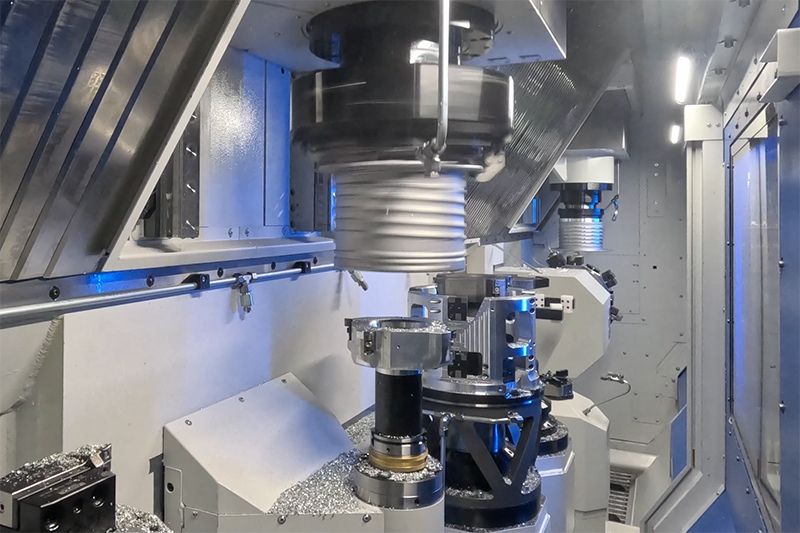
Wie auf einer Transferstraße im Kleinformat reihen sich die Bearbeitungsschritte aneinander. Der Prozess beginnt mit dem Vorschruppen der verschiedenen Innendurchmesser des Bauteils. Dabei steht das Werkzeug still und das Werkstück dreht sich. „Die Zerspanung mit einem vierschneidigen ISO-Aufbohrwerkzeug auf einer HSK-A 100 Spindel benötigt gegenüber dem herkömmlichen Drehen mit einer Schneide nur ein Viertel der Hauptzeit“, sagt André Ranke, Gebietsverkaufsleiter MAPAL. Äußerst effizient ist auch der nächste Bearbeitungsschritt, bei dem das rotierende Statorgehäuse innen und außen gleichzeitig mit jeweils vier Schneiden bearbeitet wird. Das Innenwerkzeug rotiert ebenfalls. Durch die Differenz der Werkzeugdrehzahl zur Werkstückdrehzahl ergibt sich die Schnittgeschwindigkeit an den inneren Schneiden.
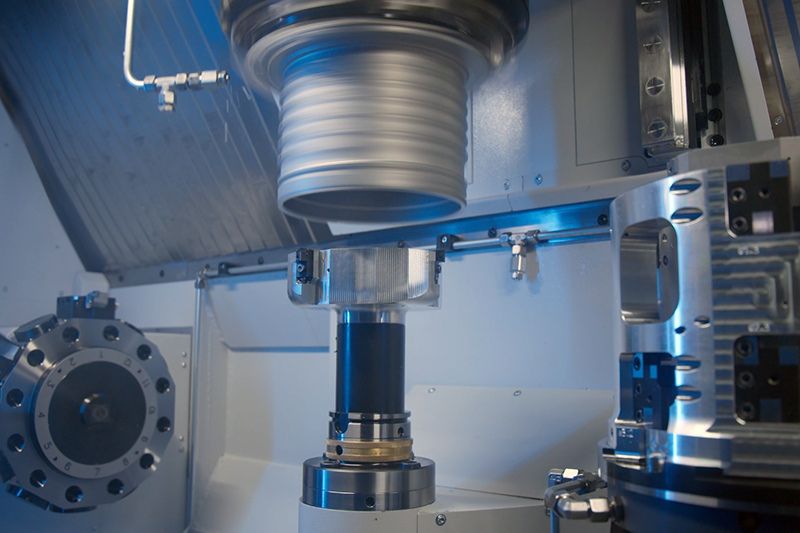
The bell-shaped outer tool stands still. The component is placed in the gap between the inner and outer tool for machining. This patented process reduces forces that occur on the clamping system. This makes it possible to avoid using a complex workpiece clamping device with vibration damping for precise machining of the thin-walled components. “When designing the tool, particular attention was paid to the large chip volume and the significant forces generated, as it is unusual for the inner and outer diameters to be machined simultaneously”, explains Michael Kucher, Component Manager E-Mobility at MAPAL.
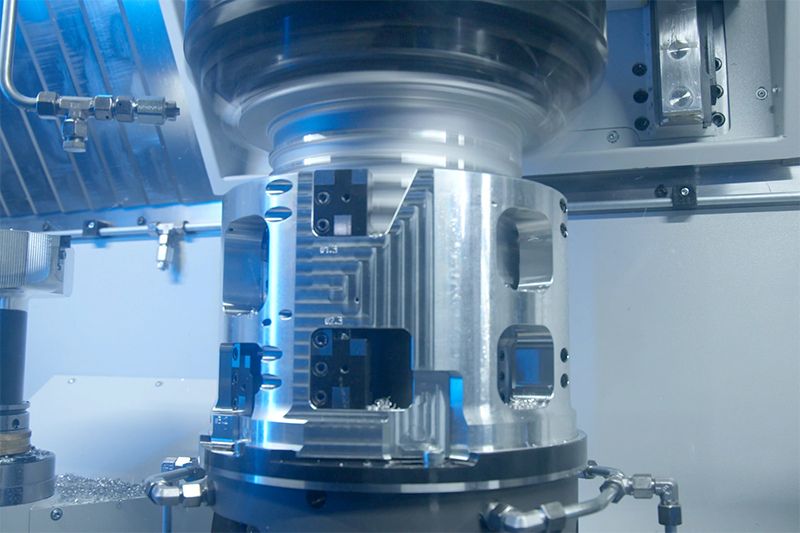
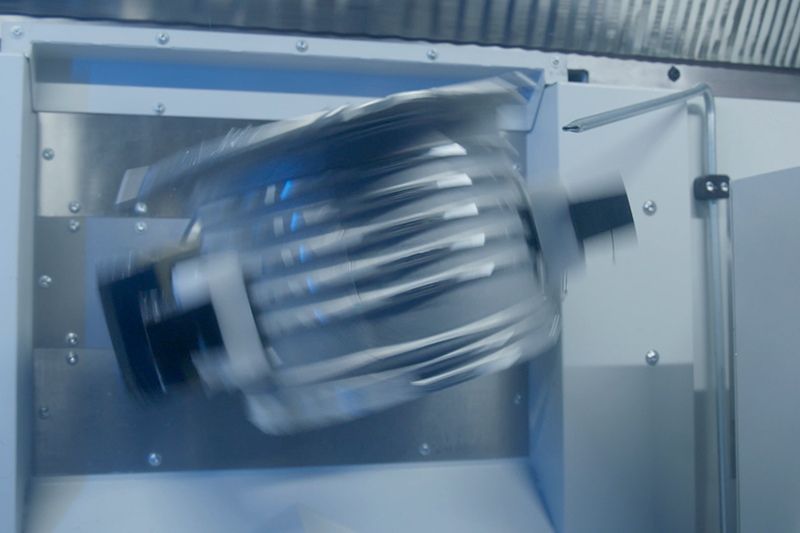
During finishing, only the fine boring tool is driven, while the component stands still. This prevents workpiece shapes that are not rotationally symmetrical from causing imbalances in the material and having a negative impact. The workpiece is then reclamped in the machine and the outer area that was previously clamped in the flange area is machined. The re-clamping station can also be used for another purpose: the workpiece is placed here before fine boring to relax the material. The machine has two tool revolvers for driven tools that carry out further machining based on component requirements.
Faster and more stable than expected
“The bottom line is that the RASOMA DZS 400-2 brings together the best of both worlds: the turning speed for pre-machining inner and outer contour with the accuracy of fine boring for finishing the inner contour”, says Daniel Pilz, Project Leader at NSH TECHNOLOGY. The machine tool manufacturer and MAPAL contributed their respective core competences to this complete solution. With the serialisation of the machine, tool technology and process, the positive results of the prototype were improved even further. The process reliability achieved even exceeded expectations, allowing the targeted cutting speed of 700 m/min to be increased even further. “For this aluminium machining, the experience NILES-SIMMONS brings from the diversity of technology has a positive impact on the overall reliability of the tool technology and machine”, explains Michael Kucher, Component Manager E-Mobility at MAPAL.
The RASOMA DZS 400-2 achieves a much shorter chip-to-chip time than a milling centre. This is because all tools are already in the working area and are only brought into working position by swivelling the revolver disc. This does away with all tool changes, reducing non-productive time substantially. Using this technology, a cycle time reduction of 50% versus standard turning was already anticipated in studies. During process optimisation, cutting speeds of 1,000 m/min were achieved using optimal cutting material. The additional optimisation of non-productive time resulted in even more time saving of 20%.
Successful at high volumes
Like most automotive suppliers, LTH Castings manufactures components for various vehicle models. The flexibility of the RASOMA DZS 400-2, in which only clamping devices and tools need to be re-tooled, is useful for the production of stator housings. “With a single system and using the new process, an optimum solution, manufacturer-specific in quantity and quality, was developed and brought to series production maturity”, says André Ranke. Stator housing production is therefore possible up to a diameter of 500 mm and a component length of 500 mm.
“Every kind of housing we’ve seen can be manufactured on the RASOMA DZS 400-2 – and we’ve seen plenty of them”, says Thomas Lötzsch. The project team also got a surprise when a major car manufacturer’s housing design required an indentation on the inside of the component. The sample component from MAPAL, specially designed and produced for the process design, did not present this challenge. Yet MAPAL very quickly had a joint solution ready with the NSH Group specialists: Instead of the tried-and-tested fine boring tool, an ultra-precise actuating tool with four slides from the MAPAL product portfolio was used to create the desired inner contour. On the machine side, a connection designed in coordination with MAPAL was ready in a few days. It already achieved series production maturity during the ongoing order. As their development structure is now tightly networked, the two companies are able to react quickly to newly developed contours.
New benchmark for low costs per part
As competition on price is tough among automotive suppliers, when the RASOMA DZS 400-2 was being developed, the focus was on keeping unit costs as low as possible from the outset. This goal was achieved with a combination of high machine availability, short cycle times, machined component quality and production with reliable processes. Current calculations indicate that machining, including tool costs, can achieve economical costs per part as a result.

Contact
Mathias Ostertag Public Relations mathias.ostertag@mapal.com Phone: +49 7361 585 3566